Confronting the Popular Delusion of Colonizing Space
At the beginning of February, Elon Musk did another internal merger of his companies, putting to rest the notion that these are different companies in any meaningful sense. Earlier, he merged X with his AI company, XAI, and now he has merged X/XAI with his rocketry company, SpaceX. Then he and his son, X, drove their Model X to SpaceX/X/XAI to make X amount of bullshit claims while avoiding a global scandal about XAI’s X chatbot generating XXX images of children on demand.
But this particular announcement was accompanied with a press release that this new super company will be “the most ambitious, vertically-integrated innovation engine on (and off) Earth,” and it will launch one million data centers into space, vastly accelerating AI development, and establishing a “Kardashev II-level civilization” that will lead ultimately to humanity colonizing other planets and, eventually, the universe.
I don’t know how much of that paragraph you understood but it doesn’t really matter because it’s 100% bullshit anyway. You could replace all of the nouns with the names of barnyard animals and it would make the same amount of sense. But it’s all in service of Musk’s oft-cited goal of “making human civilization interplanetary” because the sun is going to explode someday.

His valuation soared. He’s now worth like a trillion dollars purely because people believe this stuff. The number one reason that even regular non-far-right-loonies tolerate this guy despite the comical racism and unbearable cringe is that people, in general, are desperate to get off this planet. They sincerely believe that he is the guy who’s going to do it.
So let’s talk about “making human civilization interplanetary.” That people dream about this isn’t usually something that bothers me because it gives people a sense of wonder, and even Carl Sagan, beloved by so many including me, once said wistfully “The sky calls to us. If we do not destroy ourselves, we will one day venture to the stars.” It’s a message of peace and unity and positivity and hope. Even people who rightfully hate Elon Musk think this is one of his few positive aspirations and that he’s worth keeping around for that.
But he’s ruined it. He’s an idiot who is ruining science because he’s convinced the most powerful people in the world that he’s the smartest man alive. He is probably the smartest man in the Trump administration in the same way that a flounder is the smartest thing in a bucket of seaweed. Musk successfully pressured Donald Trump to install his friend, tech CEO Jared “Satellite Dish Ears” Isaacman, as chief of NASA, and he promptly cancelled its space station program to instead build a base on the moon because Elon thinks that’s cool. It is regrettably time to dispel any illusion that Musk is doing a good and virtuous thing for humanity instead of a bunch of stupid idiot shit that won’t work and sucks and is also bad and ruinous.

We have to rip off the band-aid: Carl Sagan was wrong. We are never leaving Earth. I’m not talking about you and me, or the people alive today, I’m talking about our species. Or any species. We are never, ever, leaving Earth. Not ever.
It’s not a case of pessimism, it’s a case of rock-hard physical reality. We might put a base on the moon, like Antarctica (but it’ll be super difficult), but also like Antarctica we will never colonize it. It’s possible that we will actually land on Mars someday. But nobody will ever, ever, live there. The sun will explode first.
Let’s unpack the utterly unhinged delusions driving this man’s wealth and power:
We will never be a “Kardashev” civilization
Musk talks about the path to Mars and interstellar colonies involving us establishing a “Kardashev II-level civilization.” I don’t know how well-known this is outside of deep nerd circles, but he’s talking about the “Kardashev scale” which was proposed by Russian astrophysicist Nikolai Kardashev and ranks hypothetical alien civilizations by the amount of energy they use. A type-I civilization uses all of the energy available on their home planet, and a type-2 civilization uses all of the energy of their star. That would require some kind of megastructure like a “Dyson sphere,” with apology for introducing even more jargon. That’s a giant hypothetical enclosed sphere of solar panels we could build around the sun to capture the entirety of its energy output.
Some of you are tapping out already, and you’re right—that sounds like fantasy Star Trek nonsense. In fact, there was an episode of Star Trek about it. But this is what the inventor of the brutalist truck, ten types of exploding rocket, and a robot that calls itself “MechaHitler” thinks we’ll be able to achieve someday.
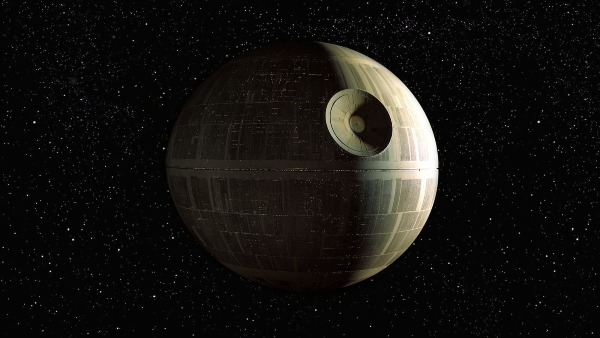
There’s a lot to unpack, here, starting with the fact that astrophysicist Freeman Dyson, who came up with the idea, wasn’t being serious. That’s a big one to start with, but it hasn’t deterred some astronomers from looking for them. There’s also the fact that there is zero incentive for a civilization to harness the entire energy output of a star. You cannot fathom how much energy that is. Picture every power plant on Earth being hooked up to a single cable you plug in to charge your iPhone. There is no conceivable use for that energy. One percent of it would simply melt the Earth.
Furthermore! If we wanted to make a Dyson sphere, what would we build it out of? The inability of the average person to grasp universal scales is going to be a recurring theme here. 99.86% of the material in the solar system is the fucking sun.
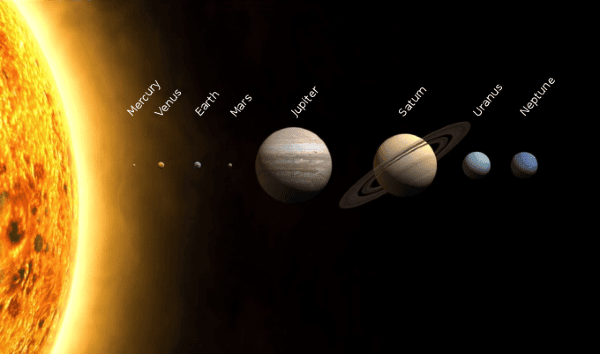
I’m pretty sure what Elon Musk thinks he’s building, when he talks about a “Kardashev II civilization” in respect to launching a million satellites is a similar concept called a Dyson swarm. Sure, there’s probably enough matter in the solar system to make enough satellites to capture—not all, but a decent amount—of the sun’s output.
Notice two things: First, we aren’t even a Kardashev I civilization yet, because we haven’t harnessed anywhere near the total energy of our own planet. Second, Musk isn’t talking about dismantling the solar system to power humanity, he’s talking about launching one million AI data centers into Earth’s orbit to run, fucking, Grok. You know, the “anti-woke” chatbot that he thinks is going to become sentient and discover new technologies sometime this year, once it stops generating child sexual abuse material for profit.
This isn’t a Kardashev civilization. He’s just latching on to random and mostly debunked sci-fi stuff that his ruined brain has decided is a civilizational roadmap instead of some silly things that physicists, often in jest, have thrown against the wall. We’ll never be a Kardashev civilization because they don’t make sense, for a million reasons you can read about (here, for example.) And yet every other component of Musk’s grand plan for humanity makes somehow even less sense.
We will never colonize Mars
This is probably the one that’s going to surprise people the most because we’ve been told all our lives in both fiction and general discourse that this is not only achievable, but soon. Mars, after all, is the most similar planet to Earth (Venus is more similar in some ways but you would burst into flames before reaching the ground. There’s a reason we don’t send Venus rovers). Discovering water on Mars basically clinched it. That’s the only thing we need, right?

Here's what paid subscribers are reading right now:

Well, Mars has almost no atmosphere, and what little it has is almost entirely carbon dioxide, notoriously unbreathable. Sure, maybe future technologies can break CO2 into C and O2 at large enough scales to fill a pressurized colony with breathable air, but you could never go outside.
The air is the least of your problems. Have you ever seen the corny 2003 science fiction movie The Core? You should go do that, I love it. The concept is that the rotation of the Earth’s core is slowing down and it will be the end of the world if it stops. Guess what? That has already happened on Mars. Its core doesn’t rotate. It is already the end of the world on Mars, that’s why the oceans all boiled away and most of its atmosphere pissed off into space: No core rotation means no magnetic radiation shield, which means the sun scorches the whole planet in radiation. We’re not talking about sunburn risk, we’re talking about living in Chernobyl.
“We’ll put radiation shields on the colony!” you say. Okay, sure. Where’s your food coming from? The Martian soil is extremely poisonous. You’re not growing potatoes on Mars like Matt Damon did in that movie, you know the one. The Talented Mr. Ripley. The dirt is so toxic you might as well be trying to grow vegetables in bleach. You need to source all of your civilizations food supply from Earth—either that or an incredibly vast amount of dirt.

You can still say that all of this is possible, but difficult. What about gravity? It’s about a third of the strength on Mars as it is on Earth. We ain’t built for that. We evolved to live in a specific environment. On Earth, we can adjust our environment in certain ways so that we can temporarily live in places normally inhospitable to human life, like Antarctica or Detroit. But we can’t simulate gravity and we will likely never be able to. We’ve put astronauts up in space stations, we know the effects of low gravity on the human body. They’re bad. Your muscles atrophy. Your bones weaken. Your spines stretch out and you get back pain. Your blood doesn’t circulate properly. It even damages your vision.
Sure, Mars isn’t space station-style microgravity, but it would still affect you. Probably the most important problem for our permanent space colony is that you likely can’t reproduce safely, if at all.
Say you work out the logistics of a habitat that solve all of these problems. You’re still left with the fear that as soon as anything goes wrong, if these support systems fail, then everybody in your whole colony suddenly starts doing this:

All the articles you’ll read about all these problems present them as being “difficult.” Sure, it is probably technically possible to build a Mars colony. What’s not possible is building a Mars colony that doesn’t monumentally suck ass. You’d hate it there. You’d fucking hate it! Everyone wants Mars colonies because they want to watch them on TV. Nobody would want to go there.
This is, again, a zero incentive situation. It would be much easier for us to build cities in Antarctica. The reason we don’t is that it would absolutely suck. It would suck worse on Mars. Elon Musk’s idea is that Mars would be a backup planet in case something happens to Earth, but as I’ve said, a Mars colony needs to be constantly resupplied by Earth. If Earth dies, Mars dies, so what are we talking about here?
People will probably say, oh, it’s a stepping stone to interstellar colonization. Hey, I’ve got even worse news for you!
We will never travel to other solar systems
Coming to terms with the fact that no human being, nor descendant of a human being, nor any life form whatsoever, will ever reach another solar system, means coming to terms with how staggeringly far away they are.
Let’s try to scale it down: Picture the radius of our solar system as one foot long. About the length of a Subway sandwich. That’s how far you have to travel in a straight line to get to Neptune. So say you keep going until you reach our nearest star, Proxima Centauri. How far away do you reckon that is? Six feet? Ten? Keep going—it’s closer to two miles.
With current technology it takes about 12 years to travel the length of that sandwich. If it took you twelve years to take one, single, tiny step, then how long do you think it would take you to walk two miles at the same speed? Man I’m bad at math so I’ll let you calculate that and I’m putting odds on it taking longer than a human lifetime.

But, of course, we’re not talking about current technology. We’re talking about future technology where we’ll be able to make things go really, really fast! Sure, but you’ve probably heard of the cosmic speed limit—the speed of light. The absolute fastest that anything can possibly ever go. If we push your spaceship to the speed of light, you’re getting to Proxima Centauri in just over four years. Not fun, but not too bad.
Guess what? You’re not going at the speed of light. You’re not getting anywhere near it. The only reason light is able to go that fast is that it has no mass. You have a lot of mass. That’s not an insult.

You can complain that I’m still thinking in terms of known technology, and that we can’t conceive of the technology we’ll have in the future. Nobody could have predicted anything like a large language model ten years ago (unless you were one of the people developing it), let alone one that would name itself MechaHitler and take your kids’ clothes off. That’s true, but I’m not really talking about future technologies, here, I’m talking about the known laws of the universe. Realistically, the people who calculate this stuff think that you could get your spaceship up to, maybe, 10% of the speed of light. That’ll get your astronaut to Proxima Centauri just within a human lifespan as long as they leave Earth in their 20s. I don’t know how long astronaut training usually takes.
Guess what? You’re not going at 10% the speed of light. That’s because you will need fuel to both accelerate your spaceship to that speed and then slow it down on your approach. The amount of fuel required to do that is astronomical. You’ll also need enough food and water to sustain the astronaut for their entire life. The spaceship would need to be huge. The weight of the fuel alone requires even more fuel to propel it. You see the problem.
Of course you’ve never seen a movie or show about interstellar travel that involves rocket fuel. Most of them, the ones that try to explain propulsion at all, are using some sort of engine that bends space itself, thereby getting you closer to, or maybe even as fast as the speed of light. A warp drive or something. You’ve all seen a character explain this by folding a piece of paper and poking a pen through it.

The good news is that scientists think this is actually possible, or at least there’s no reason currently known why it shouldn’t be. The bad news is that it would require more energy than rocket propulsion. That means it’s actually a worse option than using a known technology powered by a fuel cargo the volume of Lake Michigan.
I’ve only chosen to talk about the speed and time problem here but there are a thousand other insurmountable challenges (like the fact that colliding with even one mote of space dust at 10% the speed of light would obliterate your entire spacecraft.) We’re not ever doing this, for so many reasons. You can pick any ten.
The real question is why humanity has such a powerful desire to get the hell off this planet? A desire so strong that we’re willing to give a trillion dollars to a white supremacist con artist with the ability to spit a bunch of promises about things he read in popular science fiction.
I think it’s because we so perpetually feel alone. When we’re alone, we yearn to have friends. When we have friends, we yearn to have community. When we have community, we yearn to have nationhood. Knowing that we have an entire planet full of people makes us feel alone again when we picture a vast empty cosmos. We want it to be teeming with alien civilizations and we want to go out and meet them.

Maybe the Drake equation is sound, and maybe there are trillions of alien civilizations. The fact that we will never know about them makes us feel alone. But we’re not alone—we all have each other, here, on Earth, the only home we will ever have, our pale blue dot, with all of its problems and all of its treasures. Maybe coming to terms with the fact that there is no escape is the first step in realizing we don’t need one, and hopefully, that we don’t want one.
I'm writing a whole book about how geek ideologues like Elon Musk are ruining the world with crappy ideas like the very ones I talked about in this article. The working title is How Geeks Ate the World and if you like this newsletter then you'll probably like my book. If you're unsure, the good news is I’m going to be dropping parts of the draft into this very newsletter as the project comes along—but only for paid subscribers. So if you want to read along in real time, please consider subscribing. Otherwise I’ll be keeping you in the loop. Check it out here.


Here's what paid subscribers are reading right now: