Drew Pavlou and the Shitpost Economy
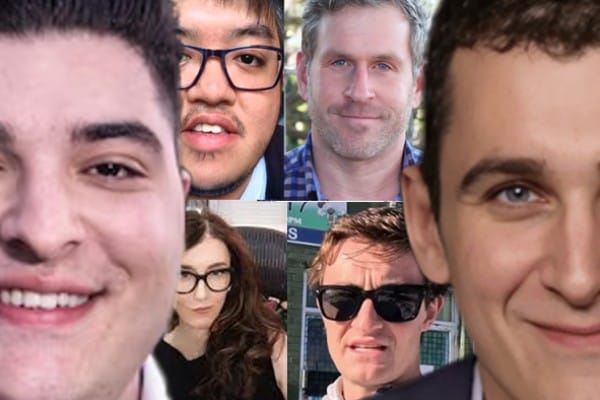
If you’ve been on social media much over the past few years you may have noticed a rising star in the “politically bonkers” space. Drew Pavlou is a damn near omnipresent figure on Twitter who shows up in so many retweets by MAGA influencers and Trump administration officials that you would easily assume he’s some celebrity whose actual work you’re unfamiliar with.
In reality, Pavlou is a nobody, but he’s a special kind of nobody who has nobodied his way into being a nobody who everybody has heard of and everyone wishes they hadn’t.
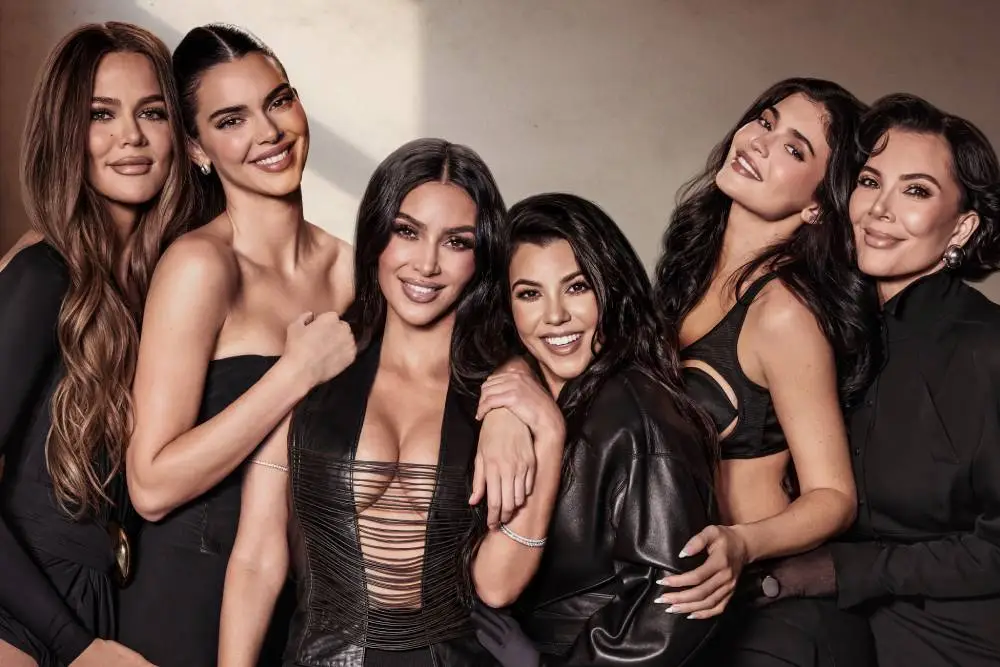
This is a new type of celebrity that sprouted out of social media, a new species in the ever evolving concept of celebrity itself. In the 20th century, celebrities were your pop stars and movie stars. After 2000 there was the reality boom and the socialites; the Kardashians, the Snookis, the famous for being famous. Not necessarily ordinary people, but people who ordinary people wanted to be.
Then the internet made celebrity even more accessible, with the birth of the influencer. These were ordinary people, but they often had some kind of talent or charisma that bought them a shorter route to success.
Now we have proper social media, and in fact it dominates our online experience, and the next phase of celebrity has arrived, but they are not people you want to be, and they don’t have charisma, and they don’t influence. There are echoes of Marshall McLuhan. If the pop star begat the socialite, and the socialite begat the influencer, then the influencer begat these unfortunate creatures.
The attention economy fully embraces the fact that the process that generates celebrity, whether it’s talent or intelligence or charisma or just good looks, is only ever a means to the true end, which is attention. If the process can be bypassed entirely then this is simply a more efficient route to the true goal. Ergo, you don’t need talent if there’s some other way to make yourself difficult for people to avoid.
This is a new phenomenon that I’ve come to call the shitpost economy.
I knew who Drew Pavlou was before anyone on Twitter had ever heard of him, because he started his career as a local nuisance. I’ve never met him personally but he was a student politician at the university where I studied, and he was known for constantly shitposting and harassing people on the student Facebook group.
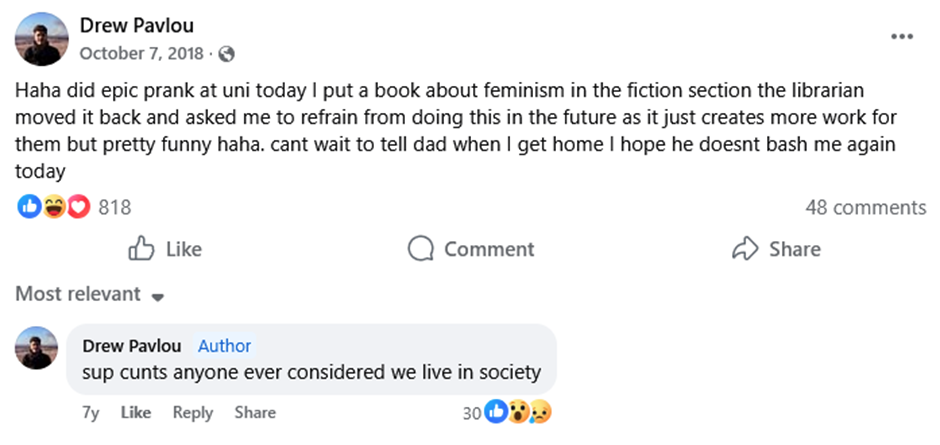
Everybody of course realized what he was really after was attention, but that’s a self-fulfilling prophecy. Try ignoring a mosquito. That’s one thing in itself, but try co-ordinating a whole room full of people to all ignore the mosquito. The attempt, in itself, just means everyone keeps mentioning the mosquito.
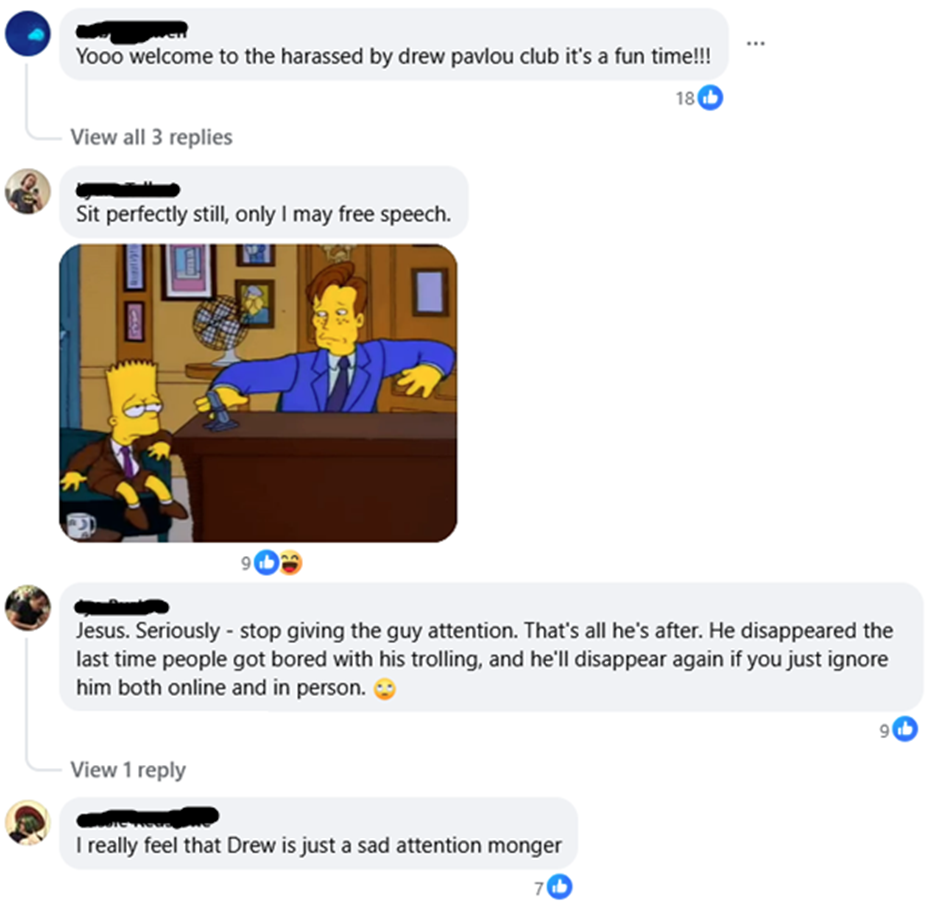
The only way to solve the problem was to ban Drew from the group, which they of course eventually did.
So Drew had to find a new way of getting that attention.
In 2019 he started the next phase of his career as an anti-China activist/protester, a cause that he seems to have chosen by throwing a dart. He burned copies of Xi Jinping Thought outside the Chinese embassy and led protests for the cause of Hong Kong independence. That was also the year that Covid-19 emerged from Wuhan, which only added fuel to the whole anti-China thing he had going on.
Now the entire university had a mosquito problem they couldn’t ignore. Some people interpreted his stunts, like prancing around the campus China institute in a biohazard suit, a tad racist, and his habit of calling everybody a cunt was considered less than ideal, behaviorally (in his defense, that’s just Australian). So, Drew was suspended.
Then he hatched a scheme so genius that it could only come from the mind of Drew Pavlou—if he could persuade someone else to legally change their name to Drew Pavlou, then that person could run for a seat on the university senate. If they won, then the actual Drew Pavlou could step into the position, evading suspension. He said that he ran this plan past some lawyers and they told him it was legit.
There is of course no way that any lawyer actually told him this would work (unless, and this isn’t unlikely, they were taking the piss out of him). This would be Drew’s first IRL shitpost. He would get a taste for it.
Around about then, I guess, came the Twitter phase, and the rest of the world came to meet Drew Pavlou, a man of passionate opinions whose ideology is, you might say, somewhat inconsistent.
Here's what paid subscribers are reading right now:
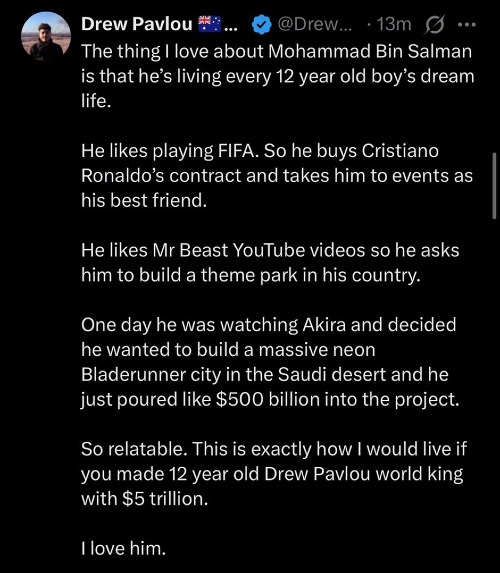
Pavlou soon fell into the habits of a Twitter power-user, posting all day long to the site, often things so left-field and baffling that you could mistake them for a Dril tweet.
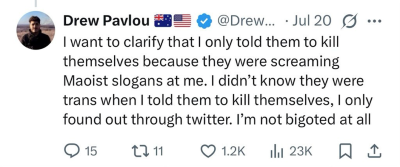
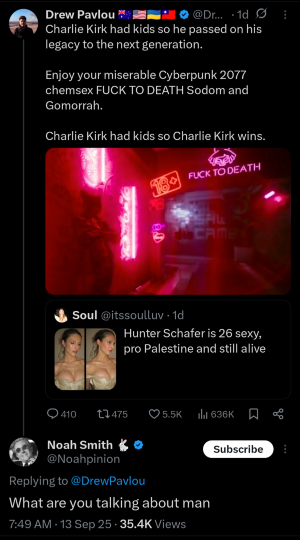
What was his political project? He seemed a normie liberal who hated communists and socialists and fascists and authoritarians, but loved the Saudi monarchy. When Russia invaded Ukraine he became an impassioned Ukraine defender and jumped on the blue and yellow flag bandwagon. After Israel surged into Gaza following the October 7 2023 terror attack, and the months into years of bombardment that followed, many of social media’s Ukraine flag bearers sympathized with Palestine, where Drew leaned hard into Israel support.
He hated Palestinians but supported Uyghurs, hated Russia but loved Saudi Arabia, and above all despised Donald Trump.
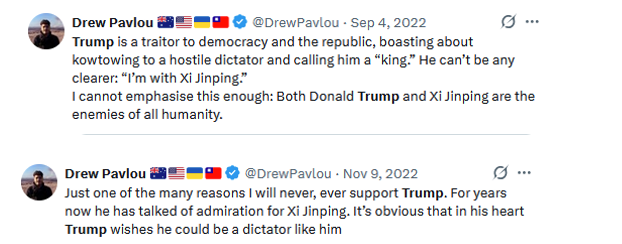
His hatred of Trump through the Biden presidency and into Trump’s second term earned him the ire of Trump loyalist neo-Nazi and JD Vance ally Captive Dreamer, an enmity that the Nazi-hating Drew Pavlou celebrated.
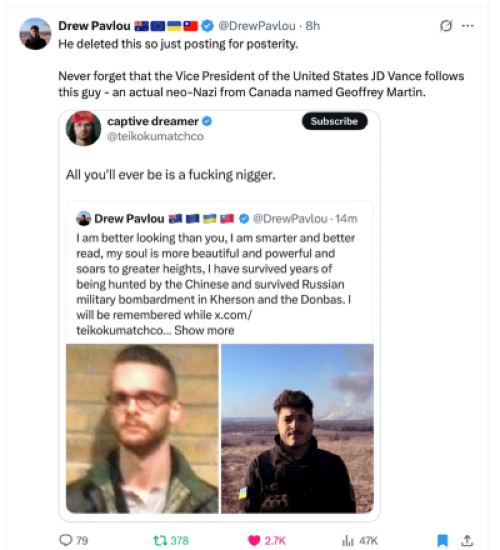
Until one day, a couple of months ago, Drew hit the really big time and got retweeted by Vice President JD Vance himself.
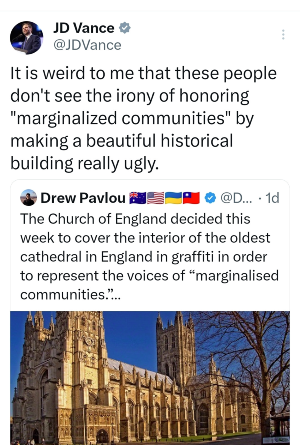
Basically overnight, Drew Pavlou then went full MAGA.
Now he has rebranded himself as a white nationalist, posts like he’s got a statue pfp, adores Trump and the Republican party, mourns Rhodesia, and aligns himself with and sucks up to… uhh… Trump loyalist neo-Nazi and JD Vance ally Captive Dreamer.
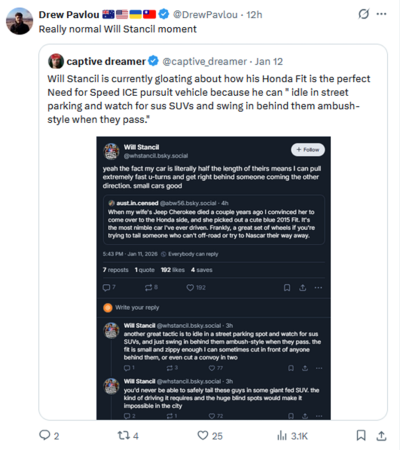
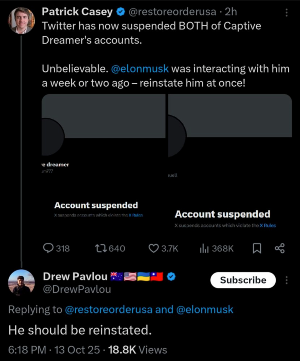
What does Drew really believe? It’s as though he carries a dowsing rod for engagement and follows whatever makes the line go up. This is the game, wading into the waters of the popular and aiming to be the most ubiquitous voice in that zone.
Drew Pavlou is far from the only online personality beholden to the shitpost economy. He’s frequently compared, in tone and personality, to a guy named Ian Miles Cheong, who has been in this game since the early 2010s. Back then he was a prolific Reddit power user and a volunteer moderator for dozens of subreddits. He was eventually banned for failing to disclose that he was a paid spammer.
As a social media personality, his character arc took an even wilder trajectory than Drew Pavlou. Initially, he appeared to be some sort of neo-Nazi, going by the handle Sol Invictus. This was unusual because, as you can probably tell by his name, Cheong ain’t white. (He would lampshade this by calling himself a “banana”—yellow on the outside, white on the inside.)
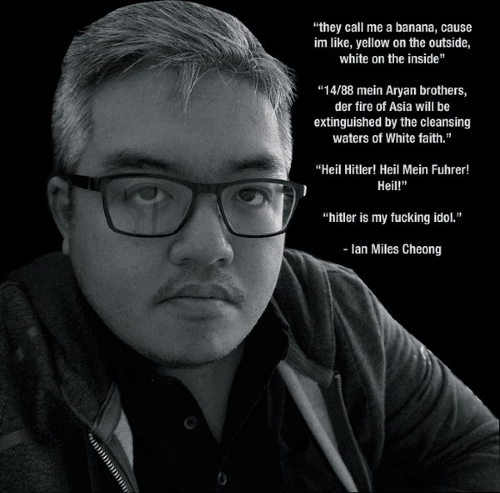
By 2015, though, Cheong was a middle-to-prominent figure in the Gamergate culture war, but not on the side that you would imagine—Cheong was what they called an SJW back then but they would today call woke. The right had a field day when they dug up his old Nazi comments and attempted to cancel him.
In the years since, Cheong has snapped back again to the far right—not the Nazi far-right this time, but the furthest right fringe of Zionism. Unlike Pavlou, he became extremely pro-Russia, anti-Ukraine. Like Pavlou, he became fanatically pro-Trump.
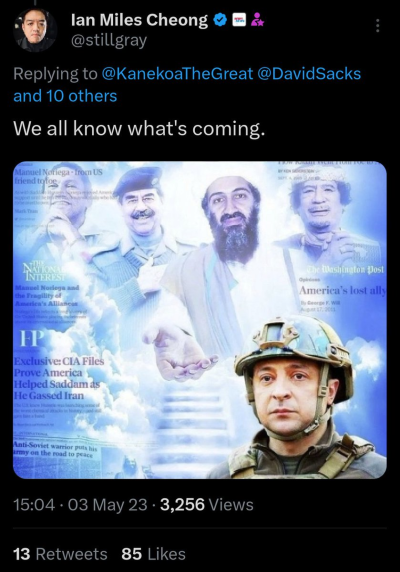
There are plenty of interchangeable attention grifters in the MAGA online sphere who you could never tell apart from quotes alone—Tim Pool, Benny Johnson, DC Draino, Jack Posobiec—but I class most of them in the category of your old school regular influencers. The shitpost economy is a separate undercurrent. They are lesser beings on the hierarchy, which makes the sycophancy and the grift even more depressing. If I’m coining a category here I suppose I should at least roughly define it, and I think an important part of that definition will be the willingness of one to change their apparent beliefs or ideology, not in response to persuasion or new evidence, but according to direction they see the winds of the attention market blowing. Say what you will about how much of a fuckwit Jack Posobiec is, he is at least consistent.
Sometimes you need to change your entire physical identity to better fit the ideology you’re wearing. It’s possible, on the internet. If you’re someone like Ian Miles Cheong, you can hide behind a Roman statue pfp and heil Hitler, or you can cloak yourself in a VPN and you’re a Malaysian reporter or a patriotic American expat. If you’re Drew Pavlou, you can post 50s propaganda posters and cosplay the Aryan ideal…
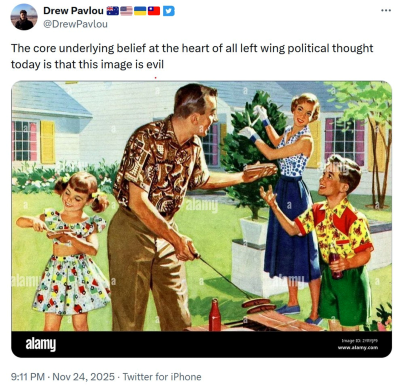
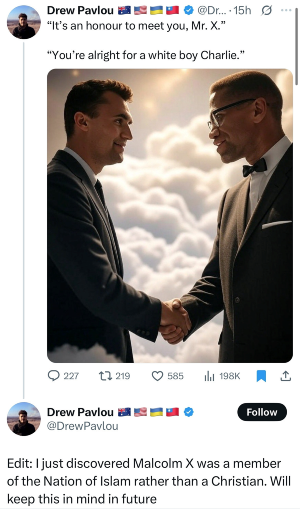
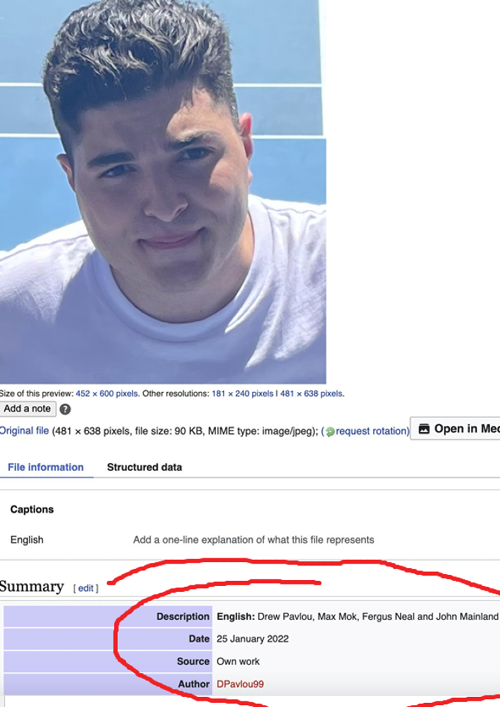
…or if the Overton window shifts then you can draw attention not your true skin tone and compare yourself positively to Malcolm X.
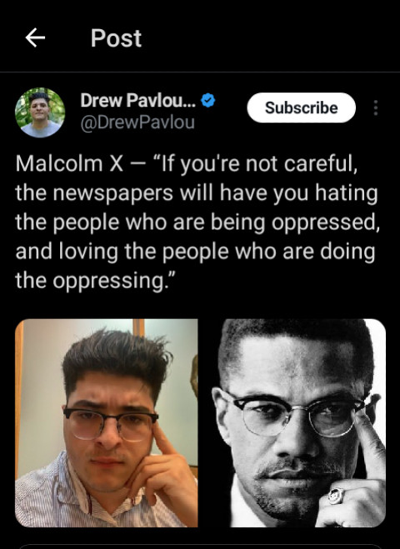
After all, with a name like Pavlou you could very well be white or black. Or, you know, Greek or Turkish. Or Arab. Or Pakistani.
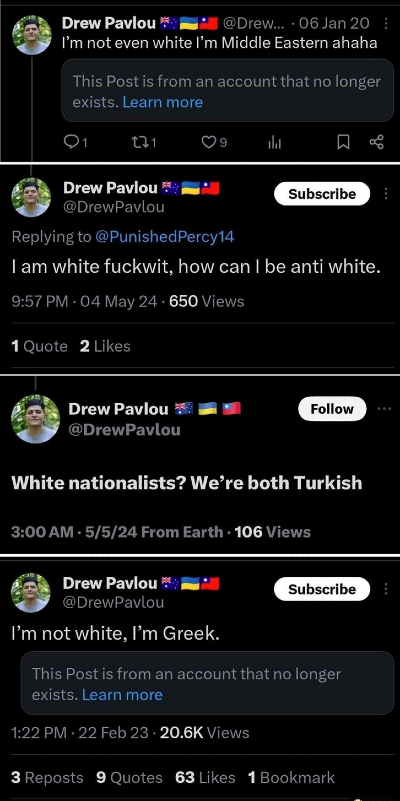
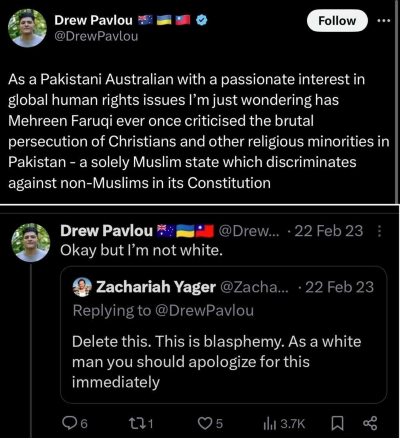
The shitpost economy is saturated. To compete, you have to flood the market. You can only really manage it if you’re unemployed. In earlier iterations of social media the benefits of shitposting for attention were that you could potentially parlay that into some sort of career down the track. You could make a successful blog or a podcast or something, perhaps, but there was no money in it right away.
Aside from Cheong, Gamergate was a primordial ooze for a lot of these types. Mike Cernovich is someone who I would put in the shitpost economy although I would say that he rises almost to the level of an influencer. In 2015 he was some guy running a law blog as well as being a D-list pickup artist who found a market for riling up all these angry video game nerds and pushing his masculinity grift onto them. During that era he was a non-stop prolific tweeter, pushing himself into every conversation, and forcing attention through sheer volume despite how absolutely insufferable he was.
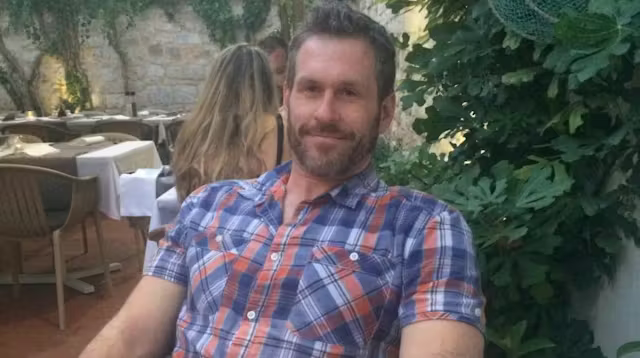
He became an early alt-righter and a prominent general in the Online front of Trump’s first election campaign, but Cernovich’s politics are more amorphous than many realise. By 2020, Cernovich had dropped Trump entirely, referring to him as a complete failure. When the Republican primaries for 2024 started up, he, as well as other temporary defectors like Christopher Rufo, fully backed Ron DeSantis.
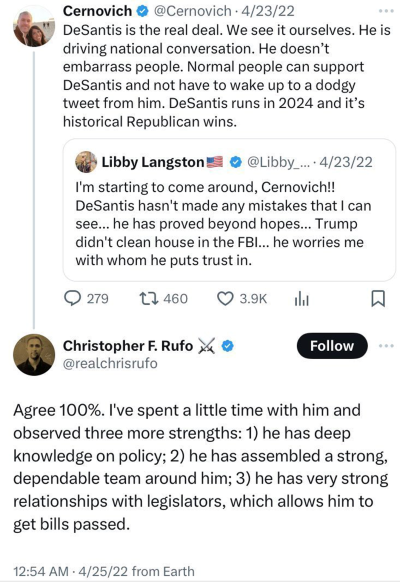
In a podcast interview in 2021, Cernovich didn’t even consider himself right wing. He pretty firmly presented himself as pro-immigration and anti-deportation.
The instant Trump beat out DeSantis in the primary, Cernovich was straight back on the Trump train, memory-holing all the times he called Trump a fraud and a failure. For Mike, this was just a shitpost economy course correction.
Many might also put Brianna Wu in this category—one of the big-three targets, though the least so, of the Gamergate antifeminism war, Wu morphed over time from mega-SJW to center-right liberal. The same progressives who fought alongside her in 2025 are now the group she considers her biggest enemies.
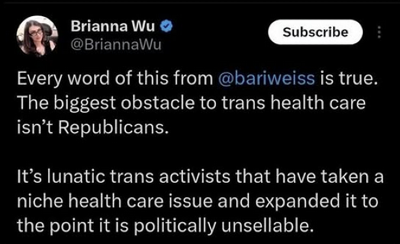
And then you have Richard Hanania.
Hanania is an online figure I’ve written about before but I no longer believe what I’ve written is very accurate. Not that it seemed inaccurate at the time—I just didn’t grasp the greater and evolving project that was Richard Hanania. As he continued to pop up in my social media mentions in ever more baffling and incongruous contexts, I feel he fits better in the shitpost economy than out of it.
So forgive me if I rehash, but for those new to the newsletter (welcome!) let me start over on just who or what the hell a Richard Hanania is.
Hanania began his career writing white supremacy material under the pseudonym Richard Hoste as a contributor and understudy for notorious neofascist Richard Spencer, and I promise that’s all the Richards you’re going to have to learn about today. During this time, Hanania, with Spencer, helped coin the term “alt-right.”
In one of his essays on the topic, Hanania, as Hoste, explained that the reasons for establishing an “alternative” right (to conservatism) are twofold: One, their project was fully transformative so they weren’t really “conserving” anything, and two, conservatives weren’t racist enough.
Besides our disagreements with mainstream conservatives on the issue of foreign policy and the relative importance of fighting terrorism, there is the topic of race and, more broadly, IQ and heredity. We've known for a while through neuroscience and cross-adoption studies--if common sense wasn't enough--that individuals differ in their inherent capabilities. The races do, too, with whites and Asians on the top and blacks at the bottom. The Alternative Right takes it for granted that equality of opportunity means inequality of results for various classes, races, and the two sexes. Without ignoring the importance of culture, we see Western civilization as a unique product of the European gene pool.
At some point in the intervening years Hanania became something of a public intellectual under his own name, and I think it’s pretty clear that he knew he was eventually going to have to craft a fake apology for his inevitable outing as a one-time Spencer acolyte, because in 2019—before the outing occurred—he wrote an academic article about crafting fake apologies.
Hanania nevertheless seems to have been fully forgiven his transgressions by members of the liberal elite as normie as Matthew Yglesias, despite the fact that he continues to associate quite happily with Richard Spencer.
But where I once wrote Hanania off as a bog standard Nazi-turned-more-respectable-reactionary, I now find his politics nearly impossible to keep track of. He now variously calls himself a liberal, though not, I don’t think, a Democrat. He opposes Trump most of the time and calls his voters stupid, but then comes out in favor of Trump’s stupidest ideas like invading Venezuela and Greenland.
Then there’s still all the racist shit he says. Like, framing indigenous land rights in Australia as Australia “giving half of its country away” as though the land was given away to, like, Korea or something rather than Australians but not white ones.
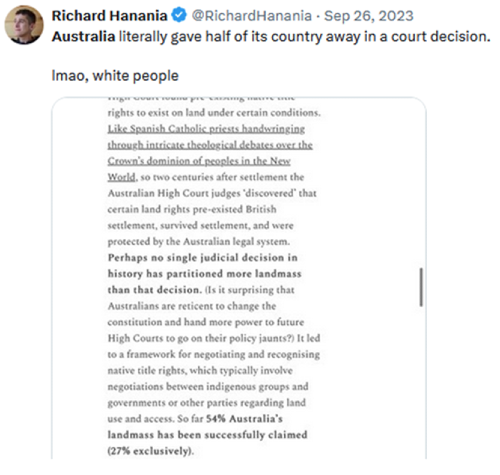
I’ve come to realize that the racist stuff—though he probably is legit racist—falls into a shitpost economy pattern. Just like when he declares that he could write something as good or better than Shakespeare if he had the time.
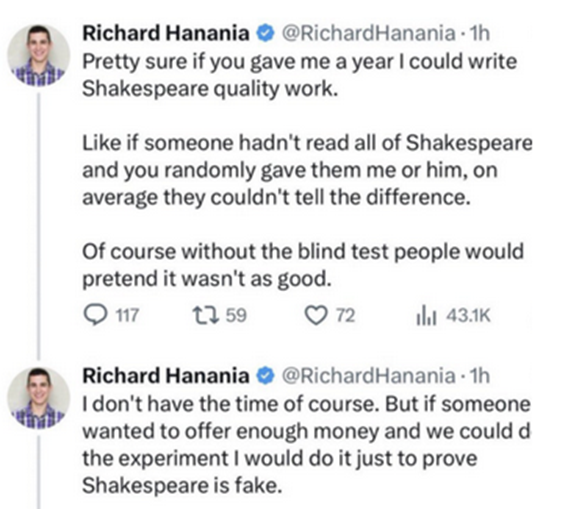
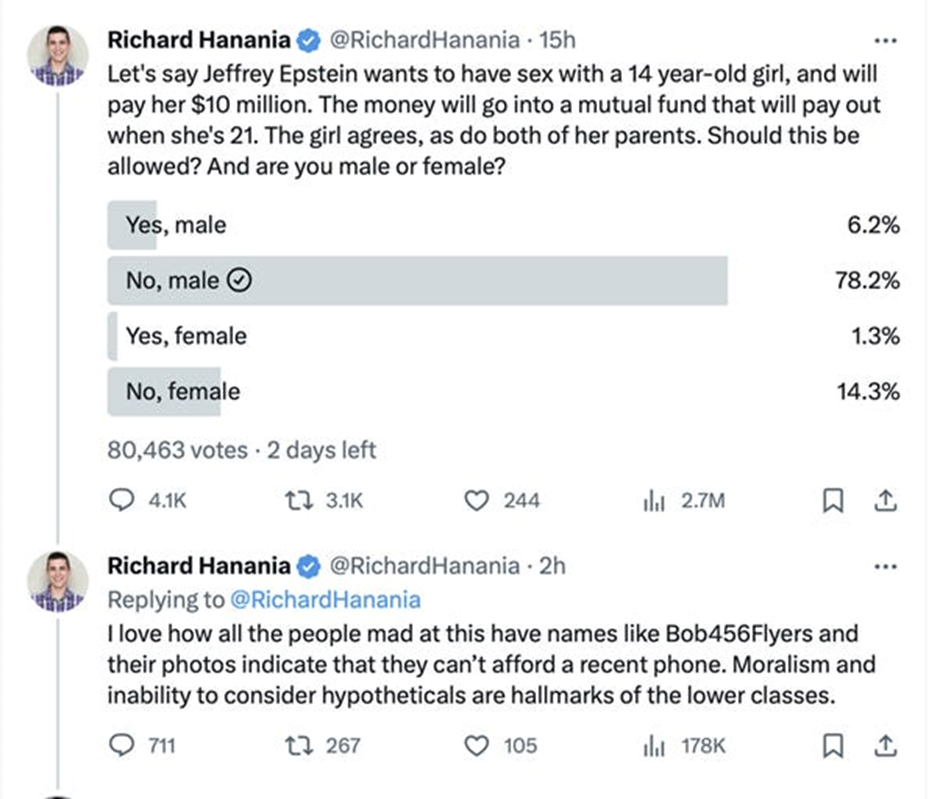
Or when he keeps dropping incredibly sus hypotheticals about Epstein…
Or when he spends like a month going on and on and on about Sydney Sweeney’s funbags and eventually writing an essay about how they killed wokeness.
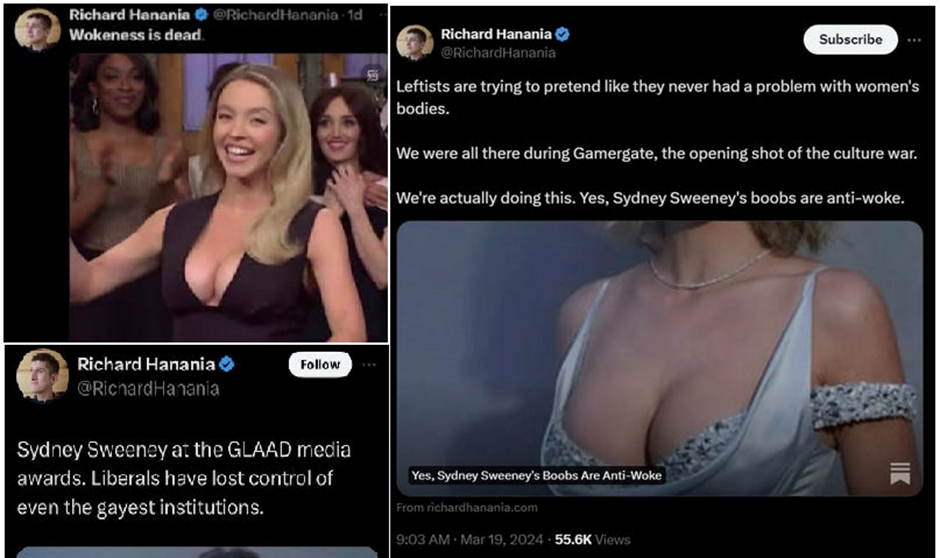
He’s a shitposter. These aren’t ideological posts at all, they are attention-drawing. Hanania can’t elaborate or extrapolate any of this further into some grand thesis, he’s just throwing shit at the screen until enough people notice the smell.
And that is another thing that divides the denizens of the shitpost economy from the influencers. You can recognize the names of these people and you might regard them significant figures in the political and cultural space, but nobody is getting Richard Hanania to do a college graduation keynote. You see Tim Pool and Benny Johnson in the White House press pool but you will never see Ian Miles Cheong there. Mike Cernovich isn’t presenting next to Jack Posobiec at CPAC. Kamala Harris isn’t doing seven figure speeches introduced to the stage by Brianna Wu.
These are the lowest rung of celebrity.
I hadn’t known, going into my research for this, that there was an actual interview out there between Drew Pavlou and Richard Hanania, but there is and I stumbled upon it. The one thing that stuck me is how boring they both are. Their positions, at least those which they are willing to discuss in this setting, seem average and mostly moderate. There is nothing shocking about either of them in this context, and that is why they are on Twitter and not your TV.
Now that social media and Twitter especially have moved toward a model where they directly pay you to receive attention, there is even less incentive to attempt to use it to build a following to shape into some sort of content creation career. There is less incentive to make coherent points about anything or establish a worldview. There is only posting, attention, drift, moving toward the winds of popular opinion, chasing retweets, controversy, ubiquity. Worse, for people like Pavlou and Cheong who use their real names, they have made themselves damn near unemployable outside of this one thing.
Ultimately it devolves into simple mimicry. Occasionally a gambler in the shitpost economy will stumble upon an unexpected jackpot, such is the case recently when shitposter Nick Shirley, a twelve-year-old Sean Penn, found a typo on a sign that inspired Trump to surge Homeland Security into Minnesota in search of foreigners running healthcare facilities, a political firestorm that even managed to overshadow the invasion of Venezuela, to say nothing of the Epstein Files.
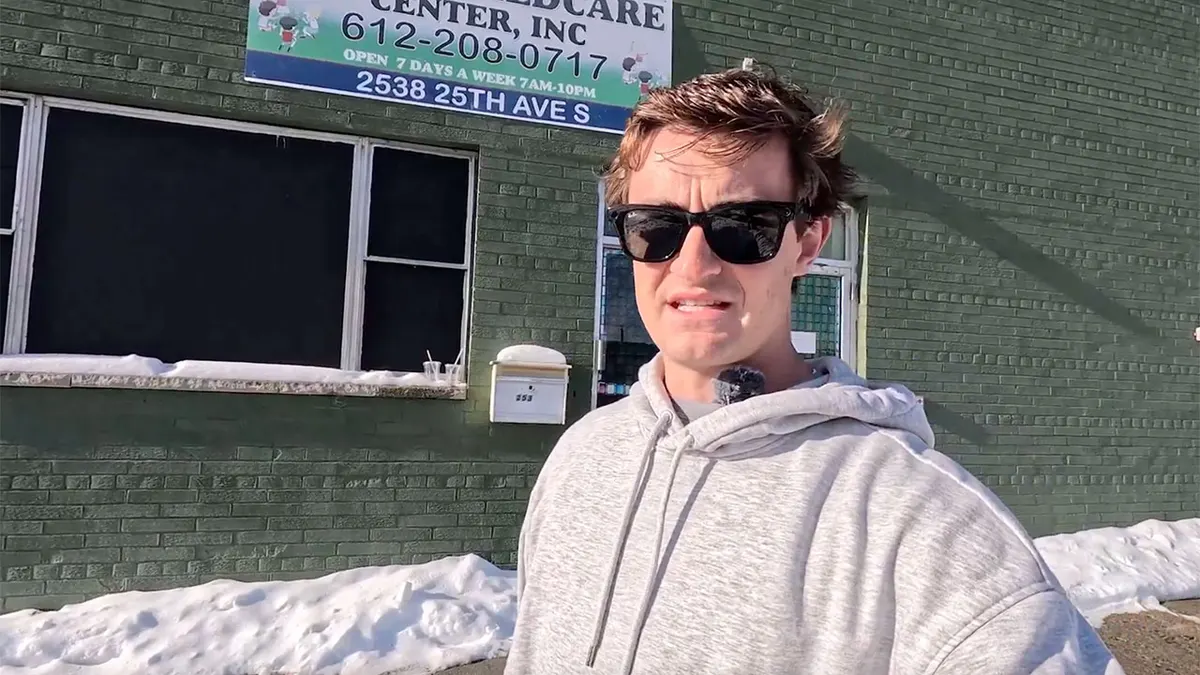
So guess what Drew Pavlou is up to now? He’s doorknocking healthcare providers in Australia in search of black people committing healthcare fraud. Always chasing those views, eyes always fixated on the stats, the retweets, the trends of the shitpost economy.
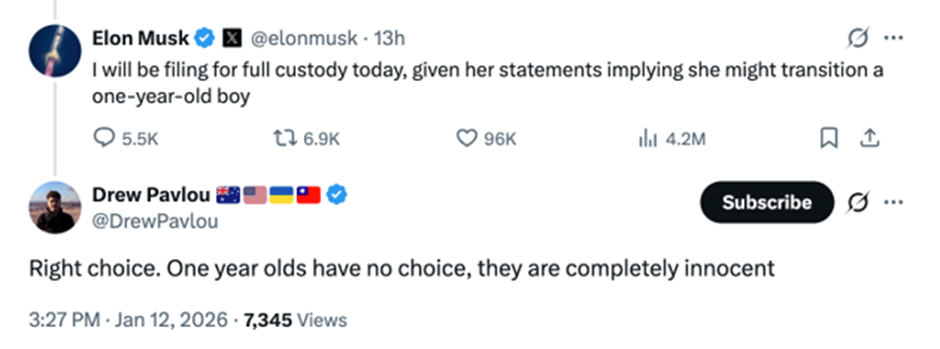
He will, almost inevitably, fall short. Always a chaser, never a creator, relegated, as they all are eventually, to the lowliest celebrity status of all: The Elon Musk reply guy.
I'm writing a book that goes into detail about how a single generation of online culture got us from the liberal democracy of the 90s to whatever the hell this is. The working title is How Geeks Ate the World and I’m going to be dropping parts of the draft into this very newsletter as the project comes along—but only for paid subscribers. A new chapter is coming out this very weekend! So if you want to read along in real time, please consider subscribing. Otherwise I’ll be keeping you in the loop. Check it out here:

Here's what paid subscribers are reading right now: