I Sure Hate This Annoying Pandemic of Online Age Restriction Laws
With everyone all focused on Donald Trump and Benny Netanyahu starting World War III out of a mutual desire to stay out of prison, another major war recently began that hasn’t earned the same headlines: Australia’s war on the internet.
Now I know I don’t talk about my home country often, but very occasionally, something interesting does happen here. For my majority Yank audience, worry not, it involves you lot too, because this same issue is currently looming over the United States like a US Tomahawk missile over an Iranian girls’ elementary school.
Starting last year, the Australian government began to roll out a series of new laws that ban anyone under 16 from viewing anything online that even looks like it might not be G-rated. Obviously there is no mechanism known to mankind by which you can tell kids what to do, so the onus has to fall upon every website in the world to ensure that Aussie kids never unwittingly glimpse a boob or a swear word or an offensive Wojak.
This means that an immense number of websites have to lock their content behind age verification, and it has to be something much more robust than clicking “YES” in a dialog that asks if you are an adult. In effect, it means “Papers, please.”
In December of last year, social media was banned for under-16s. Last week, the second wave of laws banned pornography.
Here’s the thing: The type of iron-clad age verification that these laws require from websites is much harder than the crusty old Boomer and Gen X politicians passing these laws understand, and I’ll get back to that point later, don’t you worry. Websites need to either demand a photo of your face (!!), some personally identifying government documentation (!!!!) or your banking details (!!!!!!!) to get a sense of your identity to the extent that the government finds acceptable, to ensure that you are in fact a filthy and degenerate, albeit legal, adult, rather than a sweet, tender, innocent little honey boo-boo child.
People are pretty uncomfortable with this. In Australia, when a bar reaches closing time and they turn the house lights on to entice everyone to leave, the slang for this is “the ugly-lights.” Nobody wants to show their face in full white neon at 2am after 10 standard drinks any more than they want to show it to Elon Musk’s CSAM emporium or fucking Pornhub.
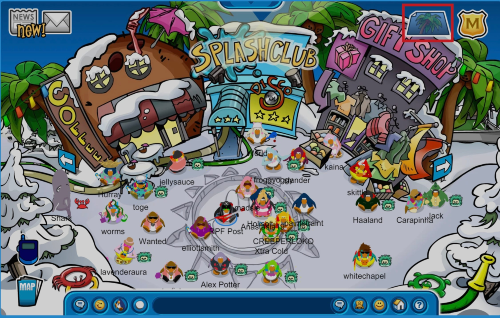
The problem is so difficult that a whole swath of the most popular porn sites have decided to simply go dark in Australia and block us from access. This is actually fascinating to me because Pornhub was the 7th most visited website in Australia at the time that it, plus all of the porn sites owned by the same parent company including RedTube, Tube8, and YouPorn, shut off access from the country—and yet this is the quietest public reaction to a major content block in human history. There was more public outrage when they shut down fucking Club Penguin.
It’s easy to figure out why. Nobody wants to publicly announce that they consume pornography. This is the easiest speech to ban in a nation with ostensibly free speech values, because people just will not go out to the street en masse chanting “We want Spicy Stepsisters back! Give us Pirate Fuck Party 5!”
Despite its phenomenal popularity behind closed doors, it is easier to ban porn than it is to ban phenomenally unpopular things like swastikas and Roman salutes, which, coincidentally, parts of Australia also recently banned. That has nothing to do with the porn and social media stuff, it’s part of a raft of new anti-anti-Semitism laws they introduced as a result of the Bondi terror attack. The laws also ban pro-Palestinian speech, so that’s bad. But the laws were so controversial that they actually triggered an implosion of the Australian mainstream right-wing party, the NLP, our equivalent of the Republicans (which is actually two parties glued together [it’s complicated]).
No such controversy occurred when they passed laws mandating you have to give up your face or credit card number to the shadiest industry in the world whenever you want to look at certain parts of the human body you might not see every day, or to some user-safety agnostic techbros who might be susceptible to data breaches (*COUGH*DISCORD*COUGH*) if they want to talk to other human beings on the interwebz.
Now, if you’re American then you might or might not be aware that a huge chunk of your politicians are desperately fighting to bring this to America. You might be shocked to learn that there are something like 40 bills floating around that propose some kind of age verification to access social media or adult content. You might not know about them because almost all of them are tangled up in the courts. But these regulations are scratching at your door. They’re desperate for them, and they’re going to get them.
Here's what paid subscribers are reading right now:
So, why the sudden hysteria over social media and boobs? Well, it actually mostly comes down to one guy, who might be the most politically influential guy you’ve never heard of: Jonathan Haidt.

In 2024, Haidt, a social psychologist, published The Anxious Generation, which argues that an observable rise in youth mental illness from the beginning of the 21st century is the result of a “Great Rewiring” of childhood. He argues that time playing outside in childhood is crucial to healthy human mental development, and that this playtime has declined over the years due first to public schooling with limited recess, dense urban design with less wilderness and fewer parks, and then later the advent of television, then video games, then the computer, then the internet, and then the smartphone drove the final nail in the coffin of healthy childhood.
Now, here’s the thing: Jonathan Haidt and I are in lockstep when it comes to the negative societal impact of the internet. My constant readers might be sick of me mentioning that I’m writing a book of my own about this. For my long suffering paid subscribers, I’m like 85-90% sure I’ll have another chapter done for you tomorrow.
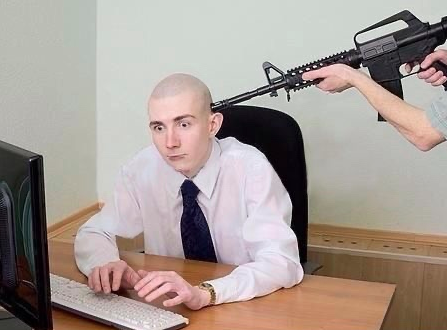
Where we sharply disagree is on the idea that it is the government’s job to enforce kids’ ability to access the internet. Not because I think it’s important that children have access to hardcore porn and/or Rare Hitler Pepes, to counter the straw men shuffling stiltedly toward my comments section—I very much think there’s a serious problem with what children have been encountering online for the past couple of decades—but rather the fact that the government can only ever limit adults’ access to adult material. Children are still going to do whatever the fuck they want. It is you who will be blockaded from rare Pepes or gay Wojaks or scripted stepmother encounters or whatever.
But The Anxious Generation is largely responsible for all of these age restriction laws popping up all over the western world. It is directly and almost solely responsible for the Australian laws in particular. Haidt’s book was catnip to politicians seeking ways to prove that they’re Doing Something to Save the Children. His prescription is for the government to do something about banning children from the internet and making them touch grass again, but the ball is in their court about how they do that exactly.

Jonathan Haidt is a Boomer. He’s riiiight on the cusp of being a Gen X, but they don’t escape blame either. The reason I’m pointing this out isn’t so I can go “OK, Boomer,” but rather that many people of his generation vastly overestimate what technology is able to do in terms of selectively filtering people, especially in a way that can’t be easily circumvented. And here’s the key thing: Kids are better at getting around digital restrictions than old people are at setting them in place.
You can barely even stop kids from doing things offline! The big guy standing at the door of the strip club is there to stop children from just waltzing in, but there are fake IDs for the ones who don’t look like toddlers. I don’t know many people who waited until the legal age before having their first drink—they got the stuff pretty easily. It’s important that these laws exist but lets not kid ourselves (forgive the pun) about their effectiveness.
The internet is something else. Boomer politicians trying to regulate what kids are able to do on the internet are like German soldiers trudging into Norway in the dead of winter and trying to fight the Elite Norwegian Ski Battalion. If you’re 60 years old, you pretty much learned the internet existed five minutes ago. If you’re 15, this is your natural habitat. You were born here. You know every corner of this place. I’m in my 40s and I gave up trying to figure out how cryptocurrency works, but it seems like everyone under 25 has a Bitcoin wallet. Kids are already making memes about how easily they’re dodging these laws.

There is no magical way to filter kids out of anything online. You can’t make a website that’s only visible to people who have passed their 18th birthday. The only possible thing you can do is make the internet harder to use for everybody.
Having to keep your papers in order just to use the internet isn’t just dystopian, it’s a goddamn nuisance. And again, there’s no website in the world that tech-savvy youth aren’t going to three-kids-in-a-trenchcoat their way into if they want to. Tech-savvy adults can use the same techniques, but man, I don’t want to jump through a bunch of hoops in order to illegally use something I’m legally allowed to use.
It’s like if they wanted to stop kids from eating sandwiches so they passed a law that all bags of bread need to be filled with ants. So I have to sit there picking the ants off the bread before I can make a sandwich. And sure, I can put on a hoodie and trudge down to the neighborhood black market bread vendor, but man I just want to make the sandwich I’m told I’m allowed to make.
The older generations are only ever playing catch-up with the youth in this arena. If you’re a lawmaker cooking up these dumbass laws, you’re entering an arms race, and not only does your enemy always have better weapons, but all of your weapons either injure you worse than they injure your enemy, or else they don’t work at all, or else they don’t even make any sense. Some of the proposed laws are so far removed from how anything works that the people in charge of the tech can only make confused expressions as they try to figure out what they’re being asked to do.

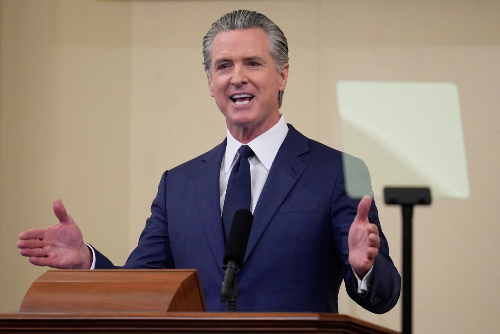
California is bonkers with this. A law that they just passed but has yet to go into effect, called the California Digital Age Assurance Act, requires operating systems to verify the age of the user—forget porn and Reddit, you’re going to get carded if you use a computer. But for reasons that I don’t understand because I’m fucking old, so I take tech savvy people’s word for it, apparently you just can’t do that on Linux. Like it’s an unparsable request. Governor Gavin Newsom, who reminds me of the Simpsons monorail guy if he was played by Matthew McConaughey, expects them to just, you know, figure it out and stop whining.
As a result of either too-difficult or incoherent age verification laws, some sites and companies just figure it’s more cost effective just to geoblock entire regions or countries and ban anyone from those places from using the website. As I’ve mentioned, the four most popular porn sites in Australia have gone dark. In August of last year, Bluesky had to block users in Mississippi. Operating system MidnightBSD has had to block users from California and Brazil, as well as an ever expanding list of countries and regions that are going to start demanding it do things that it’s not capable of doing.
And sure, you’ll say “silly goose, just use a VPN!” Of course, obviously, except that ties in with the whole nuisance thing, but more importantly, due to arms race escalation, Australia and the UK are now looking into banning VPNs.
Look, I’m the first person who is going to stand up and say that the social media companies fucked us both over and up. Elon Musk and Mark Zuckerberg are two of the worst human beings alive. We need to fight to break their grip on the youth for the sake of society. But of the few remnants that remain from my youthful libertarian streak, one of them is that top-down government regulation isn’t the answer to most things. Politicians don’t understand the problem, can’t comprehend its scale, and aren’t qualified to suggest solutions.
Of course, most of this is virtue signaling anyway. The lawmakers know that their ill-conceived band-aid solutions are primarily to get pats on the back and, more importantly, votes, for having done something to Protect the Children. But for anyone who might actually be sincere—as I suspect Jonathan Haidt is—the better solution as I see it is to, you know, parent your children.
From the government level, there may be ways to offer assistance or advice to people to parent their children. But in any case, in terms of the law, there are no rules more nuanced and individualized than the rules of a household, and none more easily enforced than by the enforcers who purchased the device, pay the internet bill, and sleep across the hall. If government time and taxpayer money is to be spent on addressing this problem—as I think it should, as per the government’s role in protecting its citizens and society and children—then it should be spent on education about the threat and support for parents in dealing with it. Don’t just write a law that makes using the internet feel like going through Customs at LAX and then dust your hands off.
I'm writing a book about the real ways in which tech oligarchs hijacked the internet and groomed a generation of reactionaries into the current western political nightmare. The working title is How Geeks Ate the World and I’m going to be dropping parts of the draft into this very newsletter as the project comes along—but only for paid subscribers. A new chapter is coming out this very weekend! So if you want to read along in real time, please consider subscribing. Otherwise I’ll be keeping you in the loop. Check it out here:


Here's what paid subscribers are reading right now: