In Defense of Rob Reiner's "North"
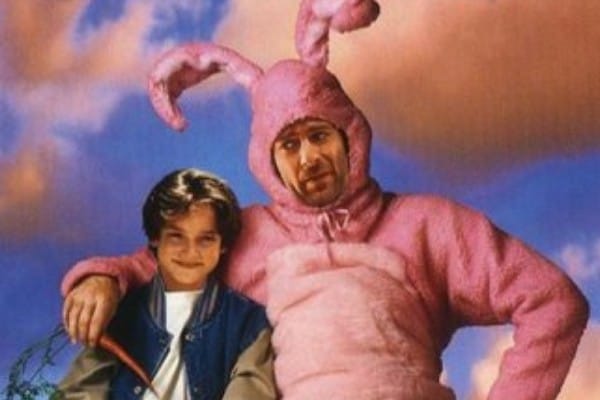
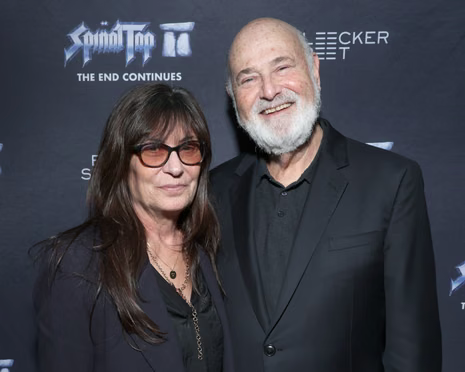
Rob Reiner’s final film was a sequel to his very first film.
This, obviously, was not planned. It’s a fact that will be remarked upon in history, but Reiner didn’t have the ability to foresee and plan for the end of his own career in the same way that, for example, David Bowie, facing a cancer diagnosis drawn out enough to assemble one last album, was able to bookend the fate of Major Tom in his final hit.
Rob Reiner and his wife, tragically, pointlessly, godawfully, seem to have ended their lives at the end of a knife wielded by their own son after a loud argument they had about him acting really creepy to everyone at a celebrity bash at Conan O’Brien’s house. They just wanted to get him out and show him a good time to try to dig him out of a bad mental place. It was a wrong move. It sucks. The whole thing sucks.
Rob Reiner wasn’t a household name. He wasn’t Spielberg or James Cameron or Ridley Scott or even Ron Howard, whose name I often mix up with Reiner’s by mistake. But even if you don’t know him, you know him.
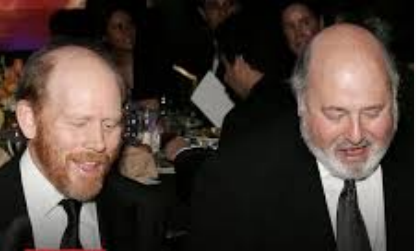
From the starting line—from the very first feature he ever directed—Reiner’s first seven films not just went on to become classics, but some are even popularly regarded to be among the greatest movies ever made. One after the other, hit after hit after hit. Those movies are This Is Spinal Tap, The Sure Thing, Stand By Me, The Princess Bride, When Harry Met Sally, Misery, and A Few Good Men.
Then he made North.
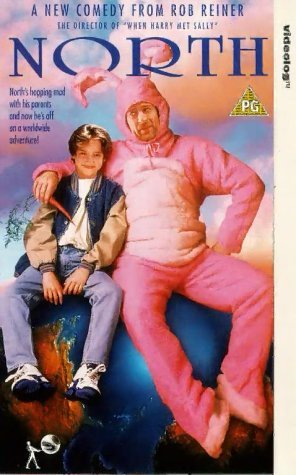
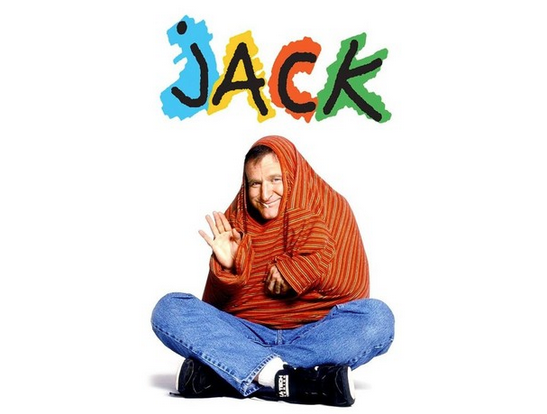
It’s not so simple to say that North broke a winning streak. He didn’t just stutter. This wasn’t just a relative disappointment from a director who had generated unusually high expectations, like when Coppola made The Godfather III. This was much closer to when Coppola made Jack.
North is, in cinephile lore, up there with Ishtar, Showgirls, and the live action Super Mario Brothers Movie. That is to say, among the worst films ever made, but not even bad in a way that makes people want to watch them.
Nor can this be chalked up as just the first sign of Reiner being, like all creatives, human and prone to the occasional misstep. Reiner was, after all, a very adventurous filmmaker. He took risks, tried new things, never pigeonholed himself once in his 40 year career. This is part of the reason why his name was relatively obscure. A lot of casual movie audiences would be very surprised that the same man who made the romcom When Harry Met Sally also made the courtroom thriller A Few Good Men, let alone the fantasy adventure The Princess Bride, the screwball comedy mockumentary This Is Spinal Tap, and the Stephen King horror Misery.
But the miraculous thing is, by most people’s reckoning, Rob Reiner never made another terrible movie in his further 30-year career. I think the only subsequent Reiner film that bombed really badly is the Bruce Willis/Michelle Pfeiffer romcom The Story of Us, but it doesn’t carry the same notoriety as North.
He also never made another truly classic movie, although I would argue that some come close, such as The American President (his next film after North,) and The Bucket List (which actually originated the term “bucket list” even though most people seem to think this is a boomer expression from way back. Nope, Rob Reiner came up with that.)
Before the news about Reiner’s murder, I had never seen North. But its existence was brought up occasionally amidst the memories, the praise, and the good humor that came with his fans’ varying expressions of mourning. Lots of talk about his death being “inconceivable.” One user on Substack Notes accused me of making a sickening, bad-taste joke for honestly praising his talent as “going up to 11,” as though the famously humorless director of This Is Spinal Tap would be offended by high praise delivered via a line from his own movie.
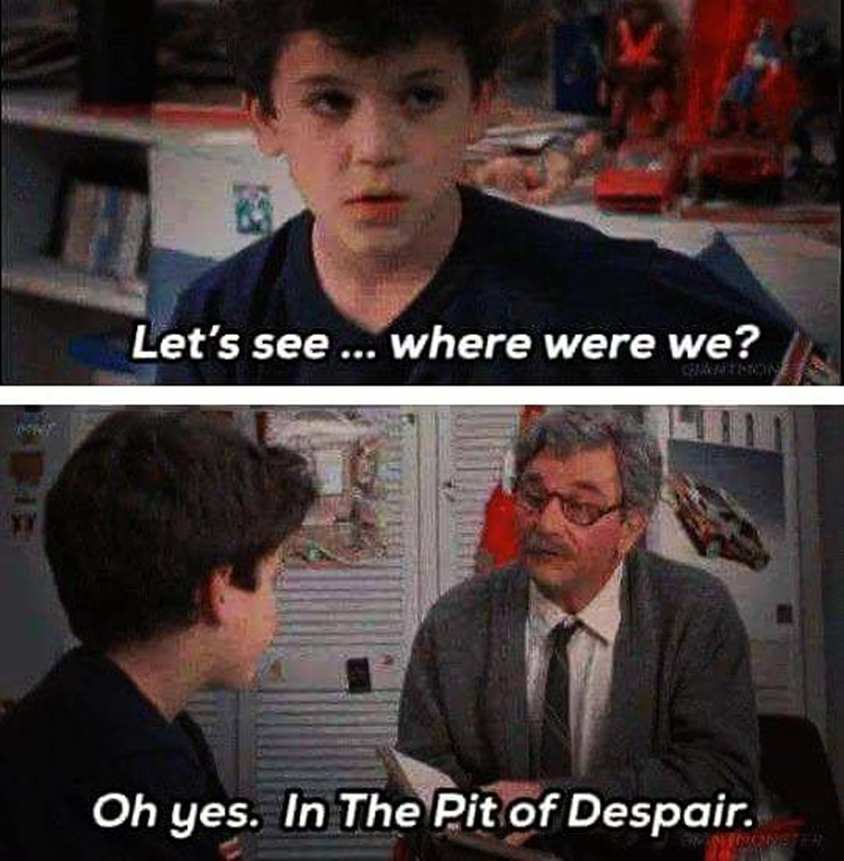
North, after all, was Rob Reiner’s albatross for his entire career. I think the most significant reason for its notoriety is its zero-stars review by the great Pulitzer Prize winning critic Roger Ebert.
Ebert had a wit that could slice titanium and took no prisoners when it came to what he didn’t like. In Reiner’s 2000 New York Friars Club roast, late actor Richard Belzer (who played a character named John Munch in a wide-spanning multiverse of TV and film, including, possibly, North) asked Reiner to read a portion of Ebert’s review aloud to the audience. It was this same review from which Ebert’s book that same year, a collection of his most negative reviews, derived its title: I Hated, Hated, Hated This Movie.
So I decided to watch North. It’s available for free on YouTube, if you can tolerate the ads, and it’s… fine?

Here's what paid subscribers are reading right now:

It is most certainly a weak movie, the weakest of his career to that point. I haven’t seen every movie he ever directed so I can’t say it’s the weakest he would ever make. It’s just not a terrible movie. I think I like it more than I don’t.
The jist of it is that a precocious young boy (which, I think, wasn’t such a tired cliché back then) named North, played by baby Elijah Wood, feels ignored by his parents. They talk endlessly about their own lives and never ask him about his life or pay attention to him or his interests. So North hires a lawyer, played by Jon Lovitz, to get him emancipated. The judge rules in his favor but attaches an unusual caveat that sets the ticking clock premise in motion: North has two months to either adopt a new set of parents or reconcile with his own. If he fails, he’ll be committed to an orphanage.
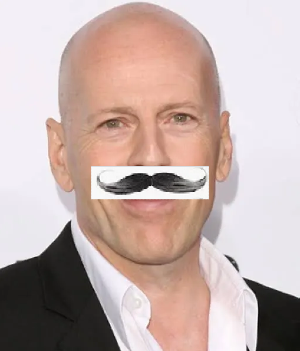
The rest of the film is kind of a light adventure comedy in which North travels the globe meeting different types of parents played by an ensemble cast of Actors You Know, all of whom are some kind of cultural stereotype, and gradually learns that home is where the heart is after all. In the meantime, the villain, another kid in North’s class named Winchell, schemes to have all children everywhere divorced from their parents and start some kind of child revolution, like a low key Children of the Corn maybe. He plots to stop North from wanting to come home. Ultimately, though, he does recognize that he’s been unfair to his parents and they do love him and, you know, et cetera. Bruce Willis plays a guardian angel or deity sort of entity who keeps showing up as different characters and pretending he’s not the same Bruce Willis that North ran into earlier.
Don’t get me wrong, I see the problems with it. The stereotypes are very by the numbers. There’s a cowboy family, an indigenous Hawaiian family, a French family (wearing berets, smoking, going hon-hon-hon,) an Amish family... It starts to go down a path that it probably couldn’t get away with today when he meets Inuits, Chinese, and, yes, an African tribe. It’s not “woke” but it’s not quite offensive either, not any more than Looney Tunes bits that did the same types of gags, and in fact they were sometimes worse. There are cute little cartoony bits where the Inuit mailbox is a tiny igloo. Is that offensive? It’s not for me to say, I guess.

And yes, it’s a cameo movie. Something for the parents to point at their screens and say hey, that’s Alan Arkin! That’s Dan Aykroyd! That’s Kathy Bates! That’s John Ritter! People their kids likely don’t recognize or care about. North’s parents are Jason Alexander and Julia Louis-Dreyfus from Seinfeld.
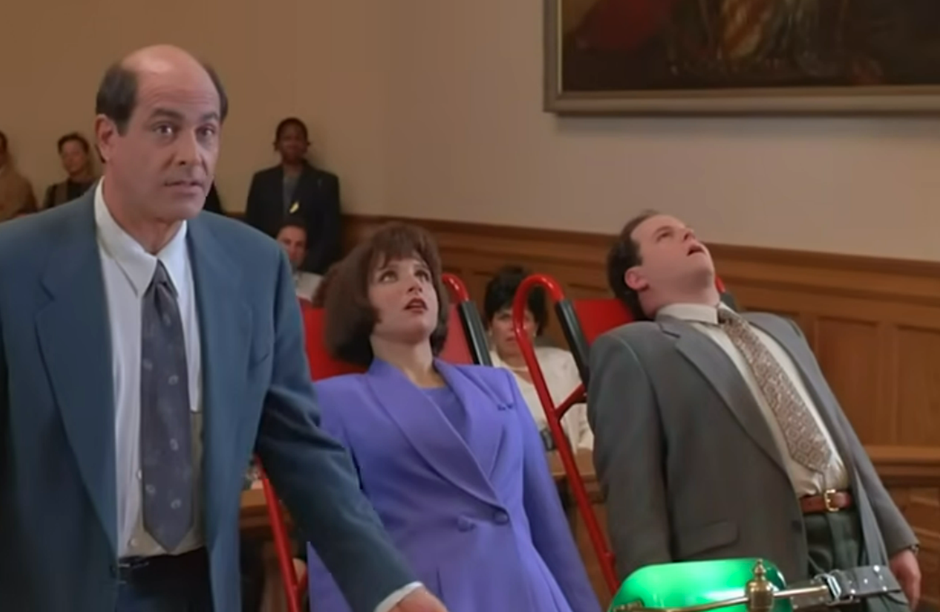
Maybe it says something about my own comedic aptitude that I laughed out loud a few times? North’s parents spend most of the movie in a dead coma, which they instantly fell into upon learning about their son’s emancipation request. They get wheeled into court and propped up at the bench anyway, and when the judge asks for their lawyer’s argument, he says mournfully “the defense rests.”
In Hawaii, North learns that “aloha” means both hello and goodbye, and remarks that it sounds confusing, to which the response is “only when you’re firing someone.”
In his review, Roger Ebert pointed out these flaws but hyperbolized them to an extent that you really are expecting a film twice as bad as this actually is. He lambasts the story’s central premise, of a dissatisfied child wishing to divorce from his parents, as deeply irresponsible and unrealistic, but to my mind it isn’t too different from other children’s media in which something like that happens… Matilda? Coraline? Maurice Sendak’s Where the Wild Things Are?
Certainly, Reiner could have done a better job clarifying an aspect of North’s character arc that is present but which Ebert seems to have perhaps missed, which is that he’s actually a pretty narcissistic kid at the beginning who comes to realize how good he actually has it, and that he’s been unfair and kind of a little shit.
Rob Reiner never disavowed North. As far as I can tell, in the face of critical reception, he always defended making this movie. He just wanted to make a quirky little fable about a kid who wonders what life would be like with different parents. After seeing it myself, I think he was right to never disavow it. Why should he?
I loved Roger Ebert and may he rest in peace, but the style he helped pioneer, that of the gloves-off razor-wit assassination-by-words movie review, I think, might have had a negative effect on culture. I used to really get a kick out of this—one of my favorite websites as a burgeoning young writer was Mr. Cranky, a film review site where all the reviews were sardonic and cutting.
It was actually my friend Stu (may he also rest in peace), himself a talented journalist, whose attitude toward criticism turned my opinion around on things like the “Golden Raspberry Awards.” When film or other art criticism turns into just kind of a mean-spirited dogpile for little more than the high-fives you get from everyone else participating in said dogpile save for its victim.
My beef here isn’t with film criticism as a concept. But there are multiple ways to criticize a film and you can tease these apart. You can criticize the technical aspects of the production, its cinematography, its poor writing, its editing. You can criticize its laziness, its cynicism, its motives. These criticisms are all valid, but some are more deserving than others of the kind of scorched earth takedown that Ebert and others became notorious for. This is a difficult type of thing to navigate, but I think it has a lot to do with how much the participants in a project should have known better, and how important it is that they know better.
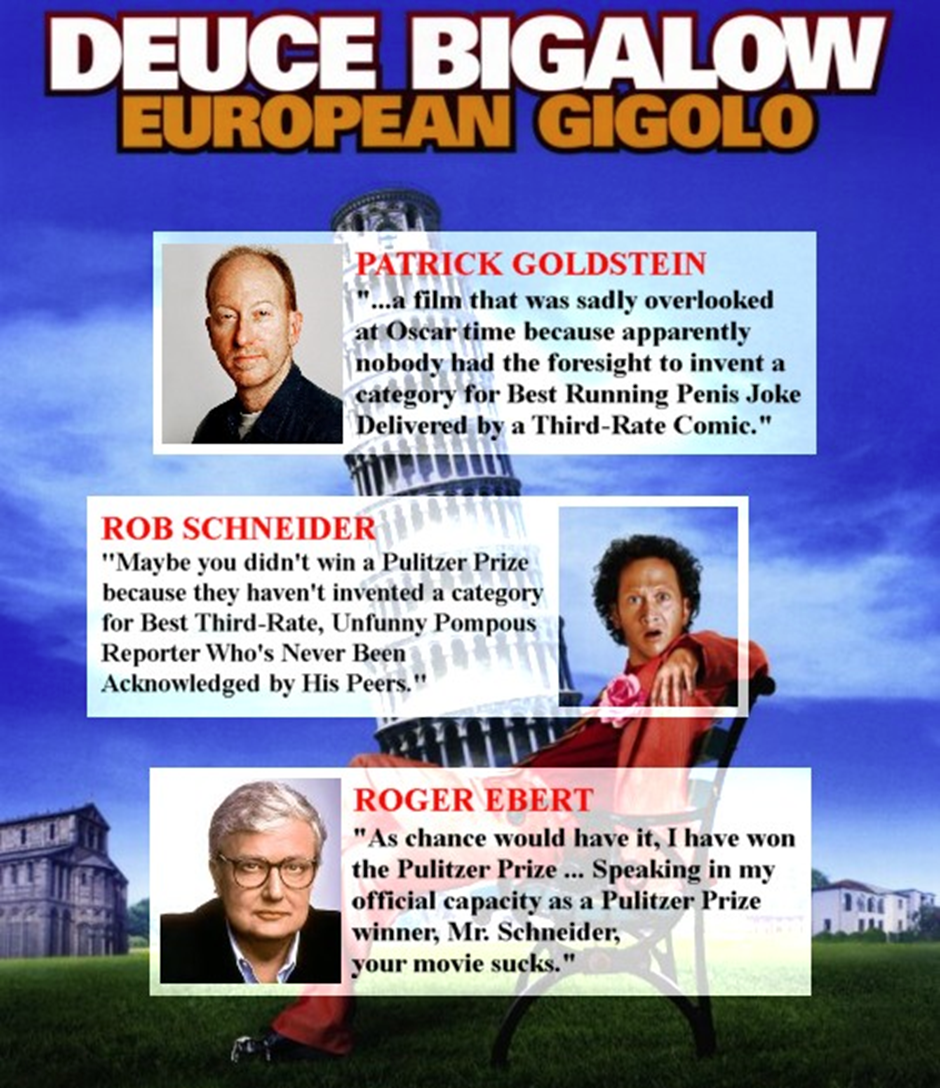
There are plenty of critical dogpiles that I take no issue with whatsoever. Rob Schneider, for example, is just a shit human being all round, whose movies, as South Park famously pointed out, are all lazy mad-libs scripts that act as vehicles for middle school sex jokes. Schneider is an asshole with an over-inflated sense of his own prestige, and the offense he took at a review of Deuce Bigalow: European Gigolo led to one of the greatest Ebert takedowns of all time.
When you talk about something like the “worst movies ever made,” and you try to group them together, for example, for a Wikipedia article, you’re actually talking about a number of different things, even different categories of thing. You’re lumping movies that simply did poorly at the box office, with: Movies that were just vehicles to promote celebrities (Glitter), corporate movies that were factory produced and pushed out by a studio either to keep the rights to an IP or they didn’t have an action movie scheduled for a particular release slot (Ballistic: Ecks vs Sever), terrible juvenile dick joke comedies (Freddie Got Fingered), movies that actually did tremendously well because of how technically bad they are and this is often deliberate (The Room), and movies that are panned because the public doesn’t like someone who was involved with it (anything starring Kristen Stewart, who is actually great, but people can’t forgive her for Twilight).
Then there are movies that I have difficulty finding an angle to criticize at all. These are films that are simply passion projects. Technically competent, harmless, benign, benevolent films that just don’t resonate with a large audience but they are stories that a filmmaker wanted to put out into the world, just to share a piece of themselves.
A recent big example is Francis Ford Coppola’s Megalopolis, which I have not seen. Coppola, one of the greatest filmmakers in American history, has been working on this opus his entire career, but it’s a project that the studios just never wanted to greenlight. Ultimately, once he became wealthy enough, he went to great financial risk to just finance the entire, unbelievably expensive, movie himself. It’s a sprawling, two-and-a-half hour long epic metaphor about the fall of the Roman Empire transposed into a 20th century setting where the main characters are architects. Again, I haven’t seen it, but the story and aesthetic sounds to me like some mix of Metropolis, Caligula, and The Fountainhead.

For its production budget, it did very badly. Predictably. Because, who the hell wants to see that?
I don’t! But, also, to my mind, fucking good on him. The man is almost 90 and has spent his life wanting to create that one specific artwork. He lived long enough and earned enough good faith capital through his critically acclaimed work that he finally had the ability to put this thing out into the world and let it exist. And the Golden Raspberries want to dogpile it, and ridicule it, and tell you what a narcissistic ego project it is, and who wants to watch an epic movie about architects?
But to attack an artwork that was produced benevolently, harms nobody, and just kind of exists in the world because its passionate creator found the energy over a lifetime to finally will it into existence before he leaves the world… I find that just kind of pointlessly mean. (And I may, over the course of the last two paragraphs, have talked myself into watching Megalopolis. Probably not in one sitting.)
Obviously, there are big differences in this comparison, given Rob Reiner directed North much closer to the beginning of his career than the end of it, and didn’t fund it himself, so obviously, in this case, if you care about the studios, they took what seemed to be a very acceptable risk based on Reiner’s output, so maybe he did them wrong, in a sense?
But beside that tax-writeoff-sounding-non-issue, I’m just glad that Rob Reiner got to tell his quirky little fable. May we all be so lucky.
I'm writing a book about how the rise of the internet propelled far-right toxic masculinity to the American Presidency in the space of a single generation. The working title is How Geeks Ate the World and I’m going to be dropping parts of the draft into this very newsletter as the project comes along—but only for paid subscribers. A new chapter is coming out this very weekend! So if you want to read along in real time, please consider subscribing. Otherwise I’ll be keeping you in the loop. Check it out here:


Here's what paid subscribers are reading right now: