On Public Death and Public Justice
VALE
It’s shaping up to be one of those years. You know what I mean. The last big one was 2016. The news reported Bowie’s death on January 10, and Alan Rickman a few days later, and then it was like a cascade—Harper Lee, then Prince, then Muhammad Ali, then Gene Wilder, then Leonard Cohen, then George Michael, then Carrie Fisher. Someone running those names on a real-stakes dead pool game that year would either break the bank or be hanged as a witch.
Donald Trump’s election win is the most remembered reason why 2016 feels like the end of something and the beginning of something else, a new calendar era, but for the birth of the Devil this time—Anno Diaboli. This unlikely run of celebrity deaths, though, really set the tone. Something old and wholesome was being purged from the world as something new and awful slouched toward Washington to be born.
Every single year brings with it, I’m going to say, around six to ten really major celebrity deaths, give or take. I haven’t looked into it very seriously and the definition of “really major” will be as open to interpretation as the word “celebrity,” but that’s the number that vibes with me. Some years’ leaderboards feel different in a way that’s difficult to describe.
Last year’s list of departures included Robert Redford, Diane Keaton, Val Kilmer, Ozzy Osbourne, and Gene Hackman, and those names will all elicit varying degrees of reminiscent grief.
David Lynch, who perished in January, might have been the most devastating loss among pop culture fans, not just for his immense impact but for the disappointing and demoralizing circumstances of his death: Lynch, a chain-smoker from the age of eight, had developed emphysema so severe that he couldn’t leave his home. His dedication to art was so strong that he achieved the Herculean task of quitting an almost 70 year-long tobacco habit, and regaining a level of mobility such that he was able to go back to work on his projects. Then Los Angeles caught fire and turned the air to poison, and just like that he was gone. Like a turkey in the corn.
His death was bookended by that of director Rob Reiner in December—beloved also, though perhaps by a different flavor of cinephile, and marked by equally pointless circumstances. It affected me enough to dedicate that week’s column to defending what’s usually considered his worst movie.
All of these people are just people and they were complex, and we don’t know them outside of a parasocial context, and we might not have even gotten along with them in person, but some celebrity deaths just really do hit differently. And they will hit differently for different people for reasons that not everyone will be able to explain even to themselves. For example, I really liked Donald Sutherland, and was more saddened by his death than that of, say, Christopher Plummer, which barely moved me at all. I can’t say why. They were both perfectly fine people and artists. Just the specific movies I grew up enjoying, I suppose.
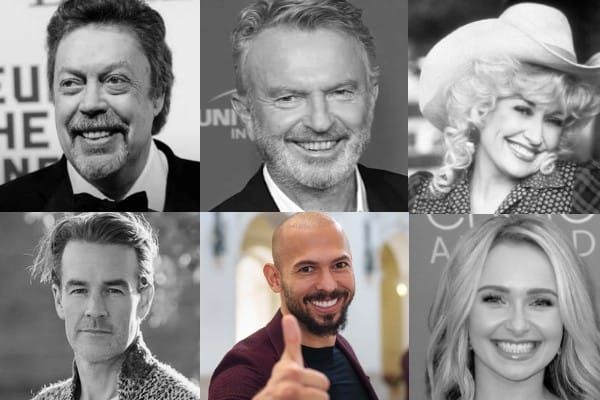
Every other year will bring the death of at least one mensch. Someone that the world just feels worse off without them in it. Someone everybody liked, if not loved. A Carrie Fisher. In the last week of August 2026 there were two, one day after the other, like a double-tap to the soul.
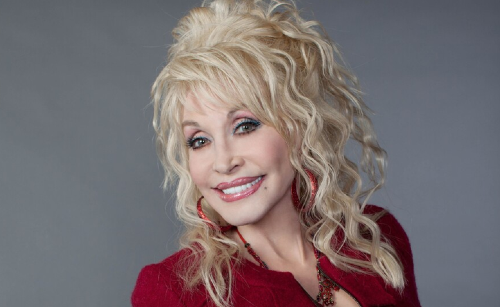
Many people loved either Dolly Parton or Tim Curry or both of them on a level that their death felt personally devastating. You could be a fan of Parton without even knowing her music, without even liking it. Her entire life was a performance, but it was not a performance of egotism or self-aggrandizement. It was one of immeasurable generosity and empathy. Her power to bewitch was so strong that Donald Trump ordered the flag at half-mast for her, and he wouldn’t ordinarily do that for anyone who hasn’t personally shot at least one immigrant, let alone a prominent activist for liberal causes.
Here's what paid subscribers are reading right now:
An obsession with Tim Curry, were one to develop it, and many did, usually began with Frank-N-Furter but was nurtured by every other role he performed. He was usually a villain, but he had the power to make you fall in love with villains. To the end he was probably the most charming man alive.
Neither Parton nor Curry were interested in discussing their private lives. What happened off screen was not open to public scrutiny. What we got on screen was more than enough. You didn’t need to know their life because they were larger than it. “Don’t dream it, be it.”
While it may not be as heartbreaking (God willing, we’re only eight months in) the ten year anniversary of 2016’s celebrity death marathon has already racked up a number of unusually upsetting ones. Sam Neill hit me pretty hard, as it did to many people of my generation for whom Jurassic Park formed a significant part of our childhood. This year also took James Van Der Beek and Hayden Panettiere. There have been others but the reason I single these names out is because they all carry this aesthetic of being really fundamentally good people. Not just good entertainers, good people.
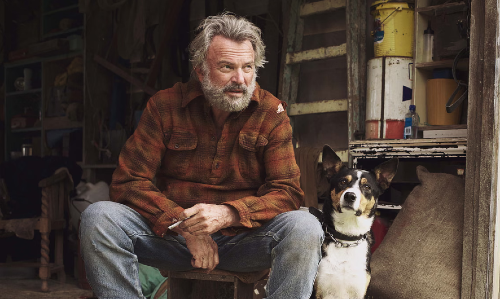
There are those who say that this is all parasocial nonsense and you shouldn’t idolize celebrities, and even if they were genuinely good people, even better people die all the time and you never knew about them. Why mourn somebody you were never even close to knowing? But I do think that it’s human and normal to be affected when a good person is visibly removed from the world, whether it’s someone you loved in life or someone you never met whose departure was announced in the news. In either case, it’s some goodness leaving the world. The bright side is, if they served as inspirations, then the loss is not a net loss. And I believe that these people were very great inspirations.
FAFO
Sometimes with these stories it is very difficult to fight the impression that bad things only happen to good people.
One of the most enduring meme phrases of the late internet age is “FAFO”—Fuck Around and Find Out. It’s basically a Gen-Y rebranding of “what goes around comes around,” “you reap what you sow,” or to be pithy, “karma’s a bitch.”
As timeless as this adage is, there’s almost no wisdom to it. There is absolutely no sense in which this is some universal law, some self-correcting moral scale. What goes around does not regularly come around. Those who sow almost always outsource the reaping to the less fortunate. There is plenty of FA in this world, but when you really think about it, when was the last time anyone of any significance experienced FO?
To the best of my recollection the last time a truly powerful or influential person was issued a suitable punishment for significant criminal activity was Sam Bankman-Fried two years ago. Before that, maybe Harvey Weinstein in 2020.
These victories, of course, do not map directly onto the prevalence of high-profile crime, even that which is committed openly and in broad daylight.
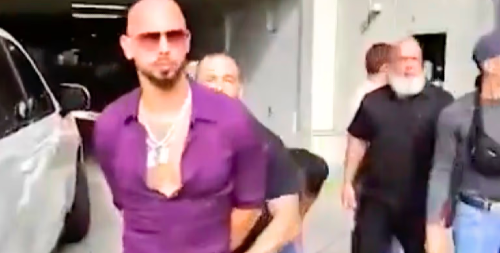
There is a very tantalizing possibility that Andrew and Tristan Tate are actually about to Find Out, after years of dodging any repercussions for their public crimes, largely with the help of the United States right-wing establishment. The USA under Trump has no intention of holding the Tates to account—it’s the British who are actually doing something about them. The fact that this upsets the far right so much is ironic because it’s actually a case of the UK doing exactly what these people have criticized them for apparently not doing: Prosecuting grooming gangs. Andrew is even, allegedly, a Muslim (though I file that under D for Doubt.)
This week’s piece is in two parts because I was writing a different essay before Parton and Curry died and changed its trajectory. I was writing a piece about why bad things never seem to happen to famously bad people, but now I can’t ignore the other side of that point: Why do bad things seem to always happen to famously good people?
What really got me about the context of Sam Neill’s passing was that he had recently beat cancer. The immediate assumption of his sudden and unexpected death was that it had returned, but that’s the thing—it hadn’t. He was legitimately cancer free. He fought like hell and he won. The battle, however, had left his body weakened enough to succumb to pneumonia. That’s just cruel. That’s like surviving a plane crash but you’re a bit dazed after you emerge from the wreckage so you trip over and break your neck. It’s fate playing takesy-backsy.
Tim Curry certainly didn’t deserve to spend his final decade and a half wheelchair-bound after an unusually young stroke. This is also the year that two former child stars—Hayden Panettiere and Lilo & Stitch voice actress Daveigh Chase—died from circumstances related to the severe trauma frequently associated with that industry. James Van Der Beek, whose post-Dawson’s Creek career was the least successful out of the four leads of that show, despite being the title character, died young from cancer. He always seemed like an incredibly nice guy. He was a loving husband and a cool dad to a bunch of kids. Couldn’t afford the cancer treatment, though, because, even though he was a celebrity, he also lived in the United States, where really good medical care requires more Katie Holmes wealth than James Van Der Beek wealth.
Last year’s celebrity death toll was no less grim. I’ve already mentioned the fatalistic cruelty of David Lynch’s death. Rob Reiner was in perfect health and experiencing a career comeback—he and his wife were pointlessly murdered by their own son after an argument at a party to which Rob had invited him to help him get out of a mental health slump because he loved his troubled son so much. I’m not even going to talk about Gene Hackman because what happened to him upsets me too much.
So. Earlier this year, after making a unilateral decision in his role as an unelected United States government official that is projected to lead directly to millions of deaths, Elon Musk (briefly) became the world’s first trillionaire. The stock market corrected itself, but it becomes more evident every day that Musk simply will not and cannot ever be held to account for anything that he does. Just this month a county DA declined to charge Musk for a pretty clear case of election bribery because… it’s a waste of time to try.
And he’s absolutely right.
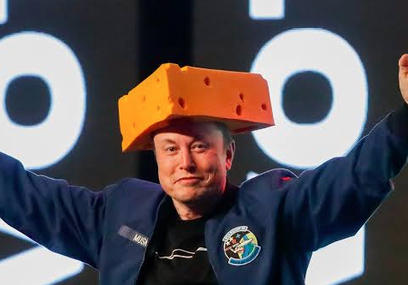
I’ve written before about why the rule of law—the idea that everyone, no matter who they are, is subject to the law—is an illusion that does not and cannot exist in a liberal democracy. The very idea that extremely powerful people can be charged with crimes was tested for the first time in the United States during the Biden administration and the result was disastrous. Donald Trump became the first former president in history to be charged with a crime of which he was straightforwardly guilty—and was found guilty by the jury. But he couldn’t be sentenced, for the same reason you can’t go after Elon Musk for election bribery. There is a rule of law on paper, but there isn’t one in reality, because we have no mechanism via which to command extremely wealthy and powerful people to obey the consequences of their actions. We can only ask them to.
If you’ve ever seen the Superman movie Man of Steel, there’s a plot point in which Superman serves a prison sentence voluntarily—perp walk and everything—in order to prove his commitment to the rule of law. This is done to establish his character as Lawful Good. There is no way to make Superman go to prison. It is ridiculous to put him in handcuffs. He is only following the rules to make a moral point.
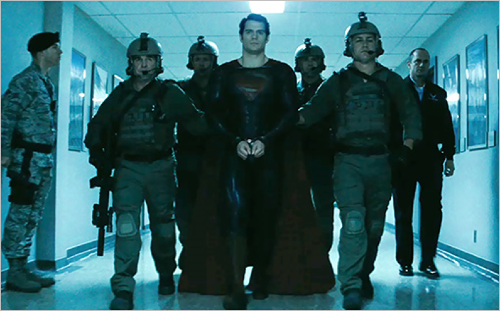
There is absolutely no way that any powerful American is ever going to play along with democracy like this. You don’t even have to be that powerful—you just have to have the correct politics and have a reasonable amount of money and clout.
For example, Alex Jones was famously ordered in 2022 to pay an astonishing 2.1 billion dollars in damages to the Sandy Hook massacre parents for years of defamation and harassment. He’s never paid a cent of that judgment and he never will. Judges keep ruling against him, but he’s reached a threshold of wealth, fame, and power that there’s nothing that anybody can really do
Circling back to the Tate brothers, a number of nations’ attempts to act against their fairly unshrouded career of human trafficking and sex crimes has been thwarted at every turn since Trump’s return to the White House last year due to the Tates’ connections to the Trump family and the MAGA movement in general. The fact that they are currently in an American prison facing extradition to the UK is a surprising development, and a really cross-every-finger sign that the far-right’s vice grip on justice might be fracturing.
You will likely, at this stage of the essay, point out that I’ve done a switcheroo here somewhere. I’ve gone from talking about the unfair and unfeeling universe inflicting punishment upon undeserving celebrities to the partisan bureaucratic machine of politics refusing inflict punishment upon deserving celebrities. These are indeed two separate things—and again, a consequence of sewing together two different essays, but I think I can actually tie this together, here, in the end, if you will permit me to try:
Man, I don’t actually want Elon Musk to get bone cancer or whatever. I’d love for the Tates to get justice, and though legitimate justice regarding Musk, Trump, and a bunch of other powerful people is probably impossible, I still want to believe that their removal from power is possible, and healing from what they have done.
On the observation that horrible things tend to happen to good people at a higher rate than they happen to bad people, I think this is true only through a statistical illusion: We see bad things happening to good people so often because there are so many more good people than bad people.
This is still Dolly Parton and Tim Curry’s world much more than Elon Musk and Andrew Tate, and we can live by their example. Don’t dream it—Be it.
I'm writing a book about right-wing reactionary movements in tech and geek culture in general. The working title is How Geeks Ate the World and if you like this newsletter then you'll probably like my book. If you're unsure, the good news is I’m going to be dropping parts of the draft into this very newsletter as the project comes along—but only for paid subscribers. So if you want to read along in real time, please consider subscribing. Otherwise I’ll be keeping you in the loop. Check it out here:

Here's what paid subscribers are reading right now:
 S Peter Davis