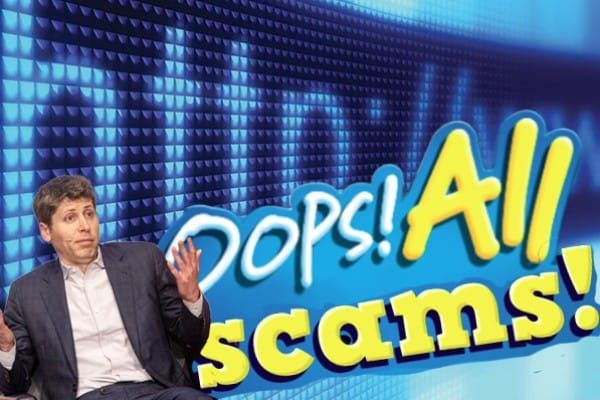
Oops! The Internet is All Scams Now
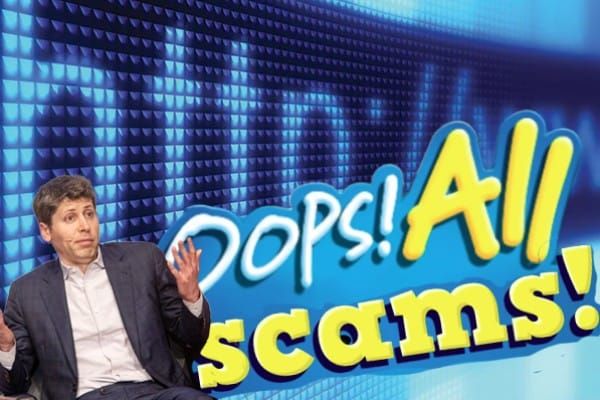
Good morning, today I’m going to explain what these two people have in common:

With the advent of any new technology comes the unified chorus of a hundred million souls yearning for the answer to the most important question: “How can I use this to make money such that I do not need to have a job or expend any kind of effort?”
Because that really is everyone’s dream, isn’t it? With all the talk slandering Humanities majors as being lazy and entitled social parasites, reactionary tech bozos have got to be the not-wanting-to-workiest guys on the planet. Every new tech development seems to quickly have its potential for utility overshadowed by its more immediate potential for scams.
On that note, have you noticed that the timeline between a technology being mostly useful and being almost entirely scams is shrinking? It took over a hundred years for the telephone to be mostly useless, but in modern times it can be relatively assured that, if your phone rings and you’re not expecting a call, it’s some kind of scam. Email had a shorter run, but it was the definitive way to communicate over the first 20 or so years of the internet before 99 out of 100 things landing in your inbox were Nigerian princes or grammatically suspicious emergency letters from “your bank.”

Now in the 2020s, particularly after Donald Trump’s return to the White House, it should be common practice, any time anything happens, to begin by asking the question “How is this a scam?” Because, unfortunately, it almost certainly will be.
It’s not just tech bozos, either, or even necessarily reactionaries. We are all fish, now, but except for water there is scams. Some people fall for scams, some people make the most of scams, some people take scams for granted, some people embrace scams, and some people just try to ignore scams altogether, but the one thing we all have in common is scams.
Distressingly, we’re all more vulnerable to scams now because we’re more desperate, and because the newest tech advances almost seem designed with scams in mind. Quite often a chain of events will occur that you don’t even know has a scam at the end of it because you just don’t see it coming.

So for a brief, exciting couple of weeks in 2026, it looked to many lost and hopeful liberals that Hunter Biden was emerging as the new energy the Democratic Party needed. Hunter, a former drug addict and playboy, had long been the specter haunting his father’s presidential term given that they couldn’t really find any major scandals to nail on Joe. After years of the Republicans trying desperately to find a way to impeach President Biden over leaked images of his son’s penis, Hunter suddenly emerged from the shadows in the growing storm of the midterms, created a bunch of social media accounts, and started cooking.
Amidst a messy factional war between Matt Yglesias style moderates, democratic socialist populists, and the snark-flinging so-called “dirtbag” left, Biden Jr seemed like the kind of normie liberal that the party might tentatively be able to rally around despite his family baggage—he’s not a young man, but he still brought relative youthful energy to a gerontocratic establishment, and he displayed a sense of humor much more raw, humble, and genuine than the obviously manufactured and overengineered Trump-mimicry that egomaniac cringelords like Gavin Newsom dealt. Hunter was actually hitting some home runs.
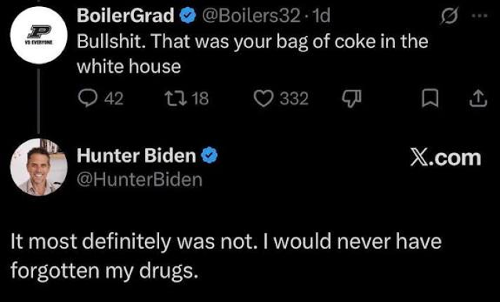
But what was his long game? Why this sudden explosive entry into public life, after timidly trying to stay out of his father’s party and administration despite the best efforts of his enemies? Was he going to try to wrangle the Democrats back into a formidable political opponent? Was he, god help us all, eyeing a run for office?
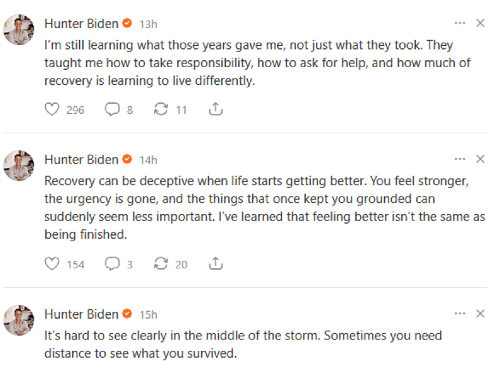
No, no. Woe be unto all of us. After a string of media appearances, that included a bizarre hotel room debate with white supremacist Nick Fuentes, Hunter Biden debuted a Substack account that he used to pump out a ceaseless chain of nearly identical and conspicuously AI-generated platitudes.
Then, on September 9, he dropped his memecoin, because of course he did. The huh-lariously named $LAPTOP coin proved to be the exact type of scammy crypto trash that the Trump crime family keeps pushing. No particular interest in using his particular clout and plight to help the US of A out of the fascist quagmire in which it has found itself, just more self-dealing blockchain garbage that preys particularly on recovering addicts and the desperate victims of his own political enemies. Man, I really wanted to like this guy. Into the bin with him!
So, what does that all have to do with this:
I’m glad sad you asked!
Here's what paid subscribers are reading right now:
This is just one form of the brand new scam in town: Automate your way to audience attention using AI, and then convert that attention into some kind of cryptocurrency racket. The latest version of it is flooding video-scroll-based social media like Instagram and TikTok with some version of this:
This started happening in September around the time Hunter Biden was cashing out on his ChatGPT generated addiction recovery aphorisms. It was definitely coordinated and the manufactured discourse was “Wow is that a real guy?? I can’t tell! I can’t tell what’s real anymore!”
And let’s be clear, we all know that’s AI generated, right? A human being does not and cannot look like that. But the fake buzz appears to have generated real press about the “mysterious Frenchman” who looks like he scalped a poodle. Then, of course, a few days after a handful of videos of the same guy punching the air in various locations went viral, the crypto coin was announced.
At the same time, also obviously coordinated, the platforms became flooded with other impossible eldritch humanoids in public spaces doing idiotic things. Here’s one that will make you want to die:
This campaign is evidently driven by an AI company called Higgfield that sells a product that churns out these affronts to god. Now they’ve written an article that describes how you, also, can use their product to make money from doing nothing. When I say they’ve written an article, I of course mean the article is also very obviously AI-generated.
Now, let me unveil the majesty of the two layers of scam happening here. I know there are people who are going to protest my implying that crypto coins are inherently some sort of scam, but can we at least admit that they’re a terrible idea that’s constantly flirting with the borders of criminality and is arguably already an obsolete version of itself? If you want to do Gambling But Stupider, just go to Kalshi or Polymarket like a modern ghoul.
Anyone who is buying a crypto coin tied to the ongoing popularity of some meme is probably someone who already has a room full of dubious bridge ownership paperwork, and not only is the investment stupid even if it’s legitimate, you’re also setting yourself up for losing your house to some pump-and-dump because you trusted a stranger on the internet with a Wojack in their profile picture.

So not only is Higgsfield’s scheme primed to create an army of insufferable little scam artists flooding the web with slop in search of a replacement for a respectable career, but the scheme itself is a scam, albeit against people who deserve to fall for it.
The idea, according to their LLM-penned screeds, is that you create a character, and a gimmick for that character. So for example, the poodle wig idiot with his public shadowboxing. You record a video of yourself doing the stupid thing, and then their product will apparently let you map your character onto the real footage. Then you post the video on social media.
But here’s the key: You then do the exact same thing, over and over again, forever. And thus your profit increases, forever.
Making a crypto token out of this isn’t even necessarily the suggested avenue to monetization, that’s just a side-hustle. According to them, you can live off the creator revenue-sharing schemes offered by the platforms alone. Here’s how they describe your path to making a million dollars a year, or more:
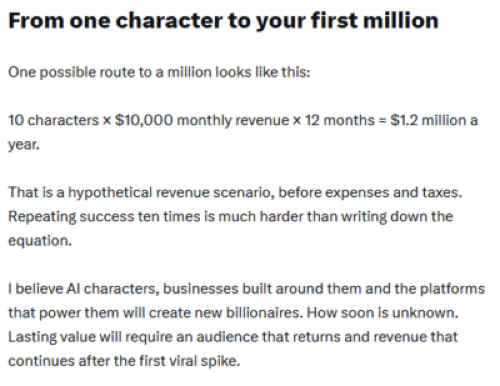
Ohkaaay.
See, here’s the problem:
Their explanation for why the boxing guy (they call him Jean Phil) worked out so well is as follows:
A recognisable face. One signature move. A new everyday setting.
That is enough to make each Jean Phil clip feel familiar before the joke even lands. You do not need a backstory to follow along.
Then comes the question: is this a real person or AI? That uncertainty gives people a reason to replay a clip, inspect the details and argue in the comments. It probably helped the spread, although its exact contribution has not been measured.
We’re talking about 4-5 silly videos with a weird looking guy punching the air at various restaurants, and TikTok scrollers momentarily questioning whether it's AI or not. I’m taking a risk writing about this topic because it might not even be a thing anymore by the time I publish. The virality of Jean Phil is driven by kids in the schoolyard opening it on their phones and showing it to their friends, and it ends when the last kid has seen it. By the time you read this sentence, the last kid has seen it.
Higgsfield’s suggested business model for aspiring “AI influencer” entrepreneurs relies on the concept of ten-second clips of hideous characters punching at the air, gyrating, or hopping in a circle maintaining a consistent or accelerating level of interest among TikTok scrollers for the foreseeable future. Their projections are on the timescale of years.
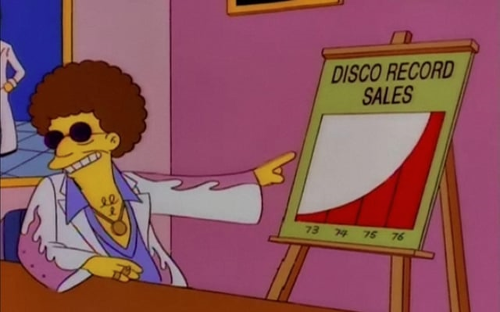
This is the most diminishing-returns concept in the history of diminishing returns. Imagine how well this business model is going to work out for the average memeslop creator when there are a million dipshits spamming the internet with their own variant of “Weird shaped guy with bizarre haircut and a number of mustaches that will frankly surprise you” doing the exact same thing over and over again in barely different contexts? As a normal person, you’re already sick of me talking about it. Imagine how quickly this fire will rip through the cornfield of people with an even shorter attention span than yours?
This is every bit as much of a scam as any other get-rich-quick-scheme. But I won’t belabor this issue to reach my final point, which is that every new technology of the so-called “Web 3” era appears to have zipped straight to the “mostly for scams” point astonishingly quickly.
I don’t think, for example, that I ever saw a convincing use case for NFTs that didn’t involve crimes. Seriously, I think that the whole entire NFT fad was almost entirely crimes with a side effect of producing the most entertaining and perplexing subculture lingo in the history of online.
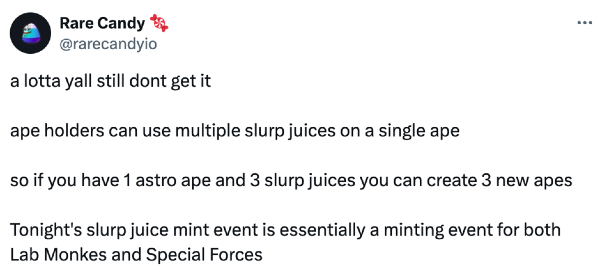
Cryptocurrency, again, I’m told, was a very promising technology when it was developed nearly 20 years ago, but almost two decades later, it’s still mostly associated with crimes. Bitcoin was supposed to supplant all fiat currency by now but you still only hear about it being the currency of buying drugs or assassinations.
“Silicon Valley startup turns out to be a scam” is literally its own genre of based-on-a-true-story teleseries now. Hulu made The Dropout in 2022 starring Amanda Seyfried as biotech fraudster Elizabeth Holmes, and Netflix has just this week released the trailer for its upcoming series about crypto fraudster Sam Bankman-Fried.
Now we have AI. Recently a friend showed me an article about how essay-writing farms based in Kenya for cheating Western college students are being put out of business by AI chatbots. And there are, just, multiple levels of terrible to unpack, here:
In the first place, it’s infuriating that there are a large enough number of unqualified college students graduating through fraud that their fraud is enough to run an economy in Kenya; The second layer is that it’s infuriating that very educated and intelligent Kenyans have no path to a living wage except to help far dumber Americans achieve greater success though fraud than they can ever achieve themselves; and level three of the tower of shit is that said educated Kenyans are the first workplace casualties of a goddamned chatbot that cheating college students are using to more cheaply acquire jobs that the very same chatbot companies are promising to supplant within the next five years.
And that is also the most succinct one-paragraph description of capitalism that I’ve ever written.
I'm writing a book about right-wing reactionary movements in tech and geek culture in general. The working title is How Geeks Ate the World and if you like this newsletter then you'll probably like my book. I've been dropping parts of the draft as the project comes along—but only for paid subscribers.
Here's what paid subscribers are reading right now: