🔒 Substack is at the Gambling Stage of Desperation
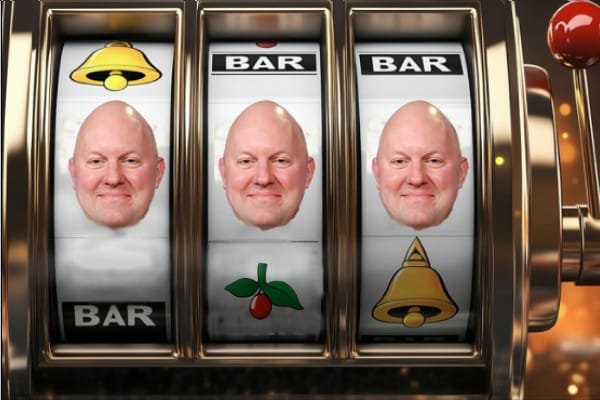
Some men are probably coming to break Chris Best’s legs.
That’s the best explanation for why Substack is entering an exclusive partnership with Polymarket as announced in a comments-disabled post from Substack’s Official Substack, a newsletter that has nearly 6 million subscribers. The post got fewer than one thousand likes. It didn’t even crack 800.
This is an unpopular thing, is what I’m trying to get across. It’s not as unpopular as Substack’s numerous Nazi-related PR disasters, like when it sent a push alert with a swastika on it to a bunch of people’s phones, but the general sentiment swirls around somewhere between negative and confused.
If you’re in the confused camp you might be someone who doesn’t really know what “Polymarket” is. I was one those people. It’s an app that lets you participate in “prediction markets,” which is also something a lot of people don’t understand. So here’s the basic 101 about prediction markets:
What the hell is a prediction market?
It’s betting.
No, really, that’s it. It’s a gambling app. It’s just unregulated gambling, the internet equivalent of a smoke-filled basement with a bunch of people screaming “di di mau!!” at you. It was literally illegal in the United States until late last year when Donald Trump legalized it in exchange for adding his son to its advisory board. How many good things can you think of that were illegal until Donald Trump legalized them in order to enrich himself personally? What’s the track record on that?
Prediction markets are functionally literally identical to what we call sports betting except that they aren’t limited to sports. I hate to abuse the word “literally” but I don’t want to give you the impression that there is any nuance: It is literally betting in the same way that a dog is literally a canine.
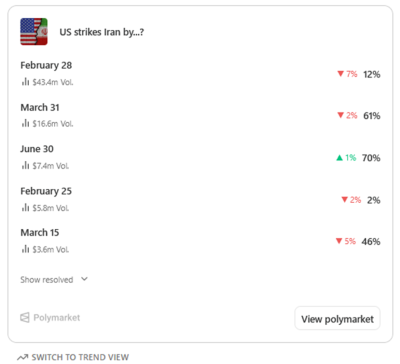
Now, with one click of the mouse, you can insert a widget into your newsletter that allows your readers to place a quick bet on, for example, when the USA is next going to kill a ton of people in a foreign country. Isn’t this fun and not grim at all?
So why are so many people confused about this? It’s probably because, in no way, shape, or form does Substack, at any point, describe it as such.

Instead, it prefers to describe it as “an emerging technology that aggregates real-time estimates of what will happen in the future.” Furthermore, “Polymarket lets people trade shares of future events, like elections, economic trends, and scientific breakthroughs. The price reflects a market estimate of how likely an outcome is to happen.”
That’s like saying “facilitating the controlled release of surplus solid assets from a stakeholder into downstream processing infrastructure in conjunction with multi-phase remediation strategy” to describe the act of taking a shit.
Fuck you. It’s betting.
Every place on the internet that has no skin in the game including Wikipedia just matter-of-fact calls it betting, as a synonym. But Chris Best, Substack CEO, wants to ease you into the idea that it is, in fact, sweet child, actually, a stock market. You’re not betting on, for example, when the next broad-daylight ICE murder is going to occur—actually, you’re trading shares of a future event, namely, the next broad-daylight ICE murder. See the difference?
But, friends, prediction markets are not markets. The very term itself was devised by a marketing firm and voted on in a boardroom from a short list of phrases to best trick the target demographic into thinking this is not gambling. Polymarket and their competitors came up with the term “prediction market” specifically to dodge gambling laws. It’s not some new buzzy Silicon Valley tech concept. That’s why they did it.
There are at least 33 countries, including mine, that see through this very obvious ruse and have banned Polymarket for refusing to abide by gambling laws. Until Trump, the USA was one of them.
Here’s the main difference: In the stock market, you’re actually purchasing a stake in a company. True, for the average individual the stake rounds down to nothing, but it’s like gravity—there is a reciprocal force, even if you will never feel the pull that you exert upon the Earth, the actions of shareholders as a total mass can make or break a company. If enough people sold their Tesla shares right now, they could actually weaken Elon Musk to the point where he could be in federal prison, where he belongs, by next Friday.
When you’re “””buying shares””” on whether Erika Kirk gives birth to JD Vance’s love child this year, you’re not actually purchasing anything. You are not, in any kind of way, exerting any force whatsoever on the chances of that happening. What you are doing is that you are putting down money on a thing happening, and if the thing happens, you get more money, and if the thing doesn’t happen, you lose the money you put down. What’s that called? Oh, it’s on the tip of my tongue, starts with a G.

Substack added a gambling widget to their app. Now you can just seamlessly drop a link to a sportsbook between the lines of your newsletter to entice your readers to quickly place a bet on that thing you’re talking about. Midterms are coming up and a lot of political newsletters are going to start discussing candidates and hey, while we’re on the topic, why not drop a few quid on your fave? It’s super easy now.
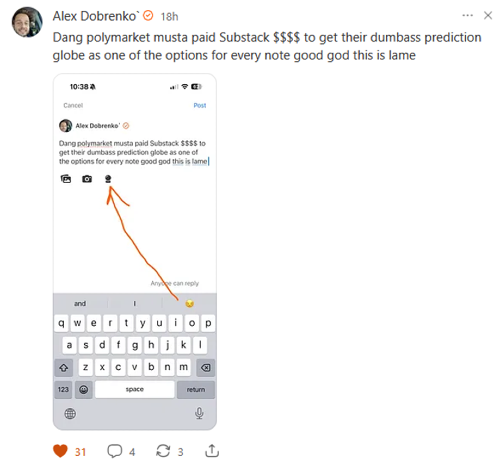
And just to be clear—literally everybody hates this. Everybody. You can even drop a gambling link in a post on Substack’s microblogging social feed, Notes. There’s a button right there. There are people in recovery from legitimate serious addictions who are going to have to avoid the site now in case someone slips a Polymarket link in their feed like a roofie. I haven’t seen a single person who likes or wants this. Alex Dobrenko hates this. Alex Dobrenko is practically the mascot of the website. This is like Mickey Mouse calling Bob Iger a fucking dumbass.
So why would they do this?
Let me break it down:
Free subscribers get access to this article on Friday 6-March