Suicidal Empathy and Prescriptive Psychopathy
In today’s context of Elon Musk condemning some millions of people to death in an effort to shock the liberal West out of its addiction to caring about strangers, we’re once again in a discourse, unfortunately, about whether empathy is bad. Unsurprisingly, the richest people in the world are all on one side of this debate and I’m sure you can figure out which side that is.
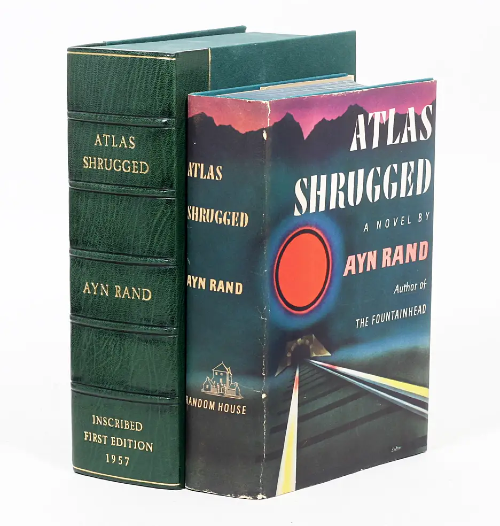
It’s not a new idea, though. It’s definitely older than Ayn Rand (it’s certainly as old as humanity) but Rand is the earliest major figure I can think of to add to the corpus of philosophical ethics the idea that putting another person before yourself in any consideration, more than being foolish, is actually evil.
As a brief sidenote: Altruism, empathy, sympathy, and kindness are four separate things, of course, and you can have any one or more of them without having the rest, but we’re going to lump them all together today because that’s what most of the people engaged in this debate are doing.
In a philosophy classroom today, Rand is a footnote. I remember one line about her in a textbook that detailed different ethical systems. In Silicon Valley, however, she towers above Plato. Her supremacy of the mighty industrialist gives tech billionaires all the permission they need to do whatever they feel like with the knowledge that government regulations are toothless once you accrue enough wealth.
Rand’s modern equivalents are even less sophisticated; These days, the oligarchs turn to a Canadian marketing professor named Gad Saad for all their permission-to-be-an-asshole needs. He’s been described as a Temu Jordan Peterson without the clinical background, and his objection to empathy as outlined in his books The Parasitic Mind and, more recently, Suicidal Empathy, is extraordinarily basic: He stresses that he doesn’t oppose empathy per se, but that his specific brand of “suicidal” empathy is what happens when you, to his mind, exaggerate the role of nurture over nature in understanding human behavior and attempt to empathize with somebody quite dissimilar to yourself.
So, for example, people wrongly try to empathize with criminals with the mindset that criminality is linked to trauma and poverty, when in reality, criminals are simply bad people. Or, people wrongly try to empathize with Muslims with the mindset that their ideologies are linked to a particular geopolitical context, when in reality, Muslims are simply bad people. And so on.
It really is that basic, and when you drill down… Saad actually kind of is opposed to empathy. If you’re only empathetic toward people who talk like you and look like you and share the same economic and geographical background and believe very much the same things that you believe, you’re really just saying that you’re only empathetic toward yourself, which, I think we can agree, is not a coherent use of the word “empathy.” But it does appeal powerfully to people like Elon Musk who see it as a useful way of making white nationalism seem high-brow.
In reality, Saad’s work will make you think Ayn Rand was a philosophical heavyweight in comparison, and I think a key reason why Silicon Valley Randroids now flock to Saad is because his books are less dense and also more explicitly racist somehow.
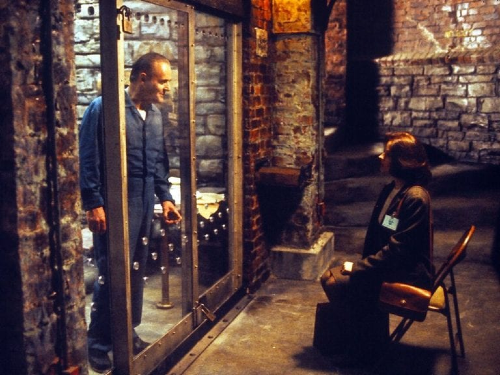
In Suicidal Empathy, Saad deliberately and hilariously refuses to define “empathy,” brushing it off in a very “it’s just complicated, okay?” way and basically conflating it with kindness. He goes on to list a whole bunch of examples of when being kind to people is bad for you, including the film The Silence of the Lambs, in which a serial killer lures women to his car by pretending to be disabled and in need of help.
Recently Saad and his fans had a powerful immune response to a video of actor John C. Reilly describing empathy as a “superpower.” Gad Saad, conversely, refers to empathy as a “parasite” and speaks of it in the language of infection and disease. He draws a sharp distinction between what he calls the “epistemology of truth” (logic, good) and the “epistemology of care” (emotion, bad). He’s just ripped off a longstanding right-wing complaint about the invalidity of emotion and laced it with the language of philosophy to dress it up like something Jordan Peterson could be proud of, when really, Ben Shapiro says it more succinctly: Facts don’t care about your feelings.
The basis of all rational self-interest philosophies is the idea that one must act logically at all times, and that trusting other people, being empathetic, and being altruistic, is all fundamentally illogical.
Record scratch, freeze frame: They’re right.
Here's what paid subscribers are reading right now:
In 1950, mathematician John Forbes Nash popularized what’s known as “game theory.” He didn’t invent it—it’s just the mathematical study of games, it had been around for a long time—but Nash did popularize the idea that pretty much all of human interaction is a type of game that we are playing against each other at all times. Like any game, we’re all trying to win, but on a large enough scale—a poker game with 350 million players—it all sort of evens out. Most people, acting in their own self-interest and treating everyone else with due suspicion, will win and lose to a roughly equal extent.
This was Nash’s idea about how Western liberal capitalist democracies remain stable. It’s not because we’re all happily co-operating with each other to build a society based on mutual interest, but quite the opposite: We’re all constantly backstabbing each other to the extent that our purely self-interested actions result in roughly balanced outcomes.
It’s called “Nash equilibrium” and it’s not an insane concept. In fact, it’s so mathematically sound, and was so groundbreaking for game theory, that Nash won a Nobel prize for it.
You’ve probably heard of “the prisoner’s dilemma,” which is the most famous thought experiment based on this concept:
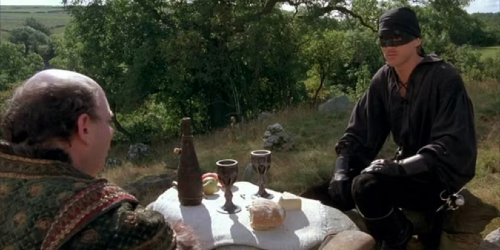
Say you have two criminals engaged in a conspiracy with each other who get caught and interrogated separately. They are each offered a deal: If they are willing to rat out their co-conspirator, then they themselves will be set free and the other will go to prison for 3 years. If neither of you take the bait and remain loyal to each other, then you both go to prison, but only for 1 year. However, if both of you rat each other out, then you both go to prison for 2 years.
It might seem intuitively like the best option is for you both to keep your loyalty to each other, since that results in the shortest prison sentence. But that would be the empathetic choice. Based on rational self-interest, your best outcome is going free (which is only possible if you betray) and your worst outcome is three years in the slammer (which is only possible if you’re loyal). The only logical choice for you is to betray, because you have to assume, given the available options, that your co-conspirator is going to ratfuck you.
If you betray, you might luck out and get the best possible outcome, but most likely you’ll get the second worst outcome. If you’re loyal, you might luck out and get the second best outcome, but most likely you’ll get the worst possible outcome. The only logical choice is to gamble for the best outcome, since the penalty for losing is better than the worst. The alternative is to gamble for a mediocre outcome and most likely get the worst.
Naturally, both of you are going to have to ratfuck each other. That’s equilibrium. That’s logic.

Possibly a simpler way to visualize this is if two men want to exchange a bag of jewels for a million dollars in cash, but because both of them are logical and do not possess the parasite of empathy, neither trusts the other, and so they both must assume that the other will rob them as soon as they attempt to make the exchange. They come up with an elegant solution: The seller hides the jewels in a particular location and the buyer hides the money in another location, and they both exchange co-ordinates to pick up their prize.
However, they both realize that they could simply not fulfil their end of the bargain. The seller can keep the jewels and run off with the money, and the buyer could keep the money and run off with the jewels. If either of them decides to actually go through with this, then the most likely outcome for them is that they lose both the money and the jewels. Both decide, logically, to ratfuck the other and wind up keeping only what they already have. Not the best outcome, not the worst. Equilibrium. Logic.
Now, the thing about Nash equilibrium as a working theory about how society operates is that it relies on an important assumption that we haven’t actually established, but it’s the same assumption that Gad Saad is relying on and all his superfans like Elon Musk are relying on. That is that the vast majority of human beings do not experience empathy. Or, at least, that they never allow it to overcome their rational self-interest. In fact, any time anyone introduces empathy into the system, it disrupts and breaks the system by breaking the equilibrium. This is why empathy is bad for you—99 times out of 100, if you’re nice to somebody, they’re going to do the logical thing and ratfuck you.
Right?

If you’re one of the statistically almost everybody who is a decent human being then you won’t be shocked to learn that’s not true at all. When they actually test the prisoner’s dilemma out on real people, they betray each other far less than the Nash equilibrium hypothesis would suggest. In fact, here’s the real kicker: Actual criminals—the very people Gad Saad thinks possess no empathy—betray each other far less often than the regular population. So much for “no honor among thieves.”
So here’s two things to understand about John Forbes Nash:
1 – He was one of the greatest mathematicians of all time, and certainly of the 20th century.
2 – He was a paranoid schizophrenic.
If you’re not a huge nerd and you know him from anything, it’s probably the multiple Oscar winning A Beautiful Mind, in which Russell Crowe plays Nash and (spoilers for an acclaimed film as old as Billie Eilish) hallucinates half of the other characters in the movie. That’s obviously not really how schizophrenia works—you don’t get Paul Bettany as your imaginary friend (man, I wish)—but the point is that Nash’s social hypothesis that everybody in the world was constantly watching each other, spying on each other, and betraying each other takes on somewhat of a new angle when viewed in that context, right?
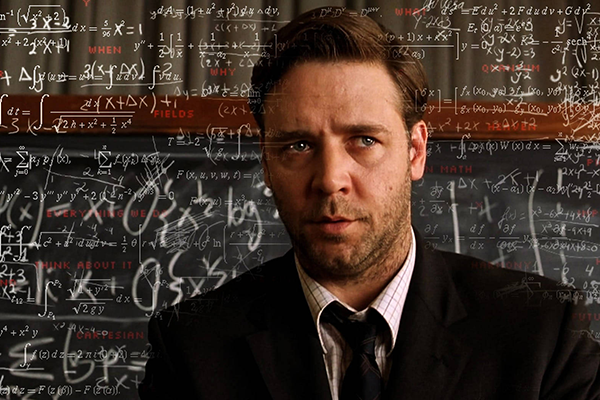
I’m not going to swear on my grave that Nash’s theories about human behavior were affected by his mental state and if someone who knows his biography better than I do wants to object then I’ll concede the point, but this isn’t really about Nash. My point is about Gad Saad and all these other men who go to bat for the idea that empathy is ruinous to civilization, like Elon Musk and Marc “Zero Introspection” Andreessen. None of these guys have ever stopped for a second to wonder if something might be wrong with them.
Might I offer my own hypothesis?
One thing that’s almost impossible to deny given the least amount of exposure to Gad Saad is that he is astonishingly, astronomically narcissistic, something which is not warranted by having achieved anything notable. Saad is one of the worst writers I’ve ever attempted to read and the fact that anyone knows he exists, ironically, represents the clearest evidence out there that we do not live in a meritocracy.
Even his allies on the right, who desperately want this message delivered by someone, are forced to admit that Suicidal Empathy is fucking unreadable. It’s written as one, endless, unfocused rant about how great he is and how stupid everyone else is. It very obviously wasn’t edited (I doubt he’d permit such a thing) and I very much suspect the publisher only needed to know that the book would get pushed for free by Elon Musk before writing him a big fat advance and sending whatever slop he sent them direct to the printer.
According to his own students, his classes are worthless. He doesn’t teach the material, and he treats his classes (ostensibly about marketing) as, again, an opportunity to deliver one, long, rambling, incoherent whine about feminism and poor people and black people, and about how phenomenally brilliant he is, to a captive audience.
So it’s unsurprising to me that a solipsist of his caliber, a man so stuck inside his own brain, would find it difficult to believe that other human beings have an inner world anything like his own. A running theme throughout Suicidal Empathy is that he sees other people as basically animals. To explain why you shouldn’t trust or be kind to strangers, he uses animal metaphors—at one point he describes the classic fable of the frog carrying the scorpion across a river, and then, in case anyone missed the message, he goes on to tell two more almost identical fables (A farmer rescues a sick snake that then bites and kills him; A man rescues a baby hippo that grows up and kills him). Then, he talks about how he thinks lions are beautiful but wouldn’t go up and hug one.
When Saad writes a book or gives a lecture or puts anything else out into the world he’s not really communicating to anyone. (Who would he talk to? There are no other minds out there). He’s talking to himself. He’s frustrated about how so many of the little broken robots around him don’t seem to understand that people are not products of their environment and so there are no societal “causes” for things like criminality and homelessness to be understood through “empathy.” There is only nature, the way people are, like the scorpion who stings the frog so they both drown. Instead of pissing about with empathy and trying to “understand” people, simply put the homeless in asylums, imprison or shoot the criminals, put the immigrants in camps, and the women in the kitchen.

Some psychopaths are content to just use their lack an empathy handicap for their own personal gain, backstabbing their way up the corporate ladder, for example, but for others, psychopathy is prescriptive. They think that if we were to somehow purge empathy from humanity then it would get rid of all the inconveniences that bother them personally and we could get back to a state of Nash equilibrium, ratfucking each other into competitive stability.
Unfortunately for the rest of us, there are other minds out there reading Gad Saad’s books and tweets. Very powerful men.
It’s very clear that Elon Musk doesn’t believe in the existence of other people either. It’s not just the fact that he keeps proposing we’re all living in a simulation; much of his philosophy seems to rely on the presumption that the majority of people in the simulation are bots. I don’t think the NPC meme is just a joke to him—when he says most people aren’t human, he means it.
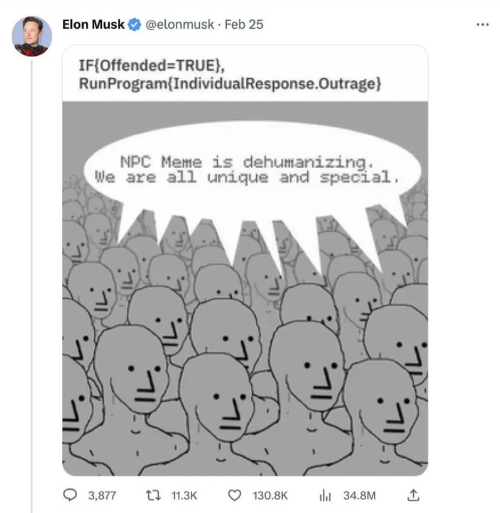
It’s a topic that comes up again and again whenever he is faced with any kind of major project. When he was trying to buy Twitter in 2022, he became concerned that a huge number, much higher than was alleged, of Twitter users were bot accounts. When he briefly seized control of Social Security last year, he thought tens of millions of names registered for benefits were fake. In January he stated that almost a million people registered to vote in Oregon were fake. His latest thing is that starving children overseas don’t exist.
Of course, Elon Musk knows that entities of some sort exist per se, but just as Gad Saad thinks they are animals, Musk thinks they are some sort of bots or Matrix programs or whatever and empathizing with them is obviously ludicrous, as they are programmed to do harm. The terrifying thing about Musk, in this regard, as shown by his purge of USAID, is that he has the power to do something about it. Killing 14 million people is very easy when they are not people.
What I find incredibly ironic is that the people who will carry on about suicidal empathy pride themselves on their logic and ability to see objective truth—they’ll only ever see a thing for what it is. But then they look at somebody who is even slightly different to themselves and they see a monkey, or a robot, or a demon, or an alien, or an amoeba.
I see another human being, and I don’t think that makes me the one with a mental problem.
So hey, I'm writing a book about toxic masculinity, online culture, and how it all led to Elon Musk and Trump. The working title is How Geeks Ate the World and if you like this newsletter then you'll probably like my book. If you're unsure, the good news is I’m going to be dropping parts of the draft into this very newsletter as the project comes along—but only for paid subscribers. So if you want to read along in real time, please consider subscribing. Otherwise I’ll be keeping you in the loop.
Here's what paid subscribers are reading right now: