The Myth of the Greedy Billionaire

Elon Musk briefly became a trillionaire earlier this year, and at some point we have to step back and think about what that actually means, and whether it realistically has any meaning at all.
I think that most people are economically literate enough to understand that Elon Musk can’t go out and buy a trillion-dollar yacht, whatever such a thing might look like. Lotus silk sails and an antimatter engine, presumably. When we say that Elon Musk is a trillionaire, nobody really thinks that he can stop off at the bank, enter his PIN, and withdraw $1,000,000,000,000. And I don’t mean that as a physical limitation—the problem isn’t that there’s no ATM large enough that it contains around a third of the total amount of physically circulating currency in the United States.

The problem is that, unlike you or I withdrawing every cent we’re worth from the bank, in order to run off to some hippie commune or whatever, Elon Musk withdrawing his net worth would instantly destroy the United States and send the world into some kind of horrible dystopian depression. And I say this with comic flair to provoke in your mind a theoretical Hollywood comedy scenario starring, perhaps, Keanu Reeves as an incompetent trainee genie working for a naïve billionaire played by Ricky Gervais (Hollywood, please buy my screenplay) because, in reality, Musk literally can’t do that even if he wanted to destroy the economy. Nobody would or could give him that cash.
In a bureaucratic sense that can be written on paper, Musk is (or was) a trillionaire, but in any practical sense, it is meaningfully the same as calling him a “squillionaire.” After a certain amount of billions of dollars in net worth, a single individual’s relationship with the economic system fundamentally changes. Net worth becomes an imaginary number.
We put men like Elon Musk, Jeff Bezos, Mark Zuckerberg, Larry Ellison, and Larry Page on a leaderboard curated by Forbes, watching them swing dance with each other as though their net worths are meaningfully different. This time last year, Larry Ellison was the richest person in the world. Today, Elon Musk is ostensibly worth about three times as much as Ellison. But this is wordplay. These people have surpassed “wealth.” In the real world, the amount of money that Elon Musk has can be expressed as both “infinity” and “zero” depending on how you come at the question.

Elon Musk probably doesn’t carry a wallet, and it’s plausible he doesn’t have a bank account. If he does own a wallet, it probably only contains photos of himself and maybe a company credit card for tipping at restaurants. Tipping is ritualistic and really the only thing that multibillionaires need money for. Otherwise, food is given to him, transport is given to him, the bills for services he personally uses are paid for him, and the money for these expenses comes from the same source as the salaries of the people who deliver his food and fly his jet—a company’s bank.
It really is hard to imagine, let alone describe, how fundamentally alien the experience of being inordinately wealthy must be. To be unable to remember the last time you bought something. To never think to check how much liquid wealth you have on hand, because the concept of liquid wealth is meaningless to you.
A mistake that a lot of leftists make when they are talking about multibillionaires is that they are “hoarding wealth,” or even less accurate, that they are hoarding money. They don’t have any money to hoard. Their wealth is how much their banks and investors (other people’s banks) will lend them based on speculation about how much return they can get for it.
I titled this piece “the myth of the greedy billionaire,” I admit, partly as bait, but I will defend the thesis: Certainly, greed is a driver for immense wealth accumulation, but at some point, wealth accumulation becomes literally meaningless. Past this point, when men continue to pursue wealth, we can no longer say that greed is the primary sin that they are committing.
Elon Musk is not sitting around in a cold sweat because his on-paper net worth Is fluctuating between five-point-seven trillion dollars and nine-hundred-and-twenty billion dollars because even an idiot like him knows that these are nonsense numbers that both equal infinity. I don’t say any of this to defend or rehabilitate the image of the multibillionaire—much the contrary. When we charge these people with greed, we are doing them a service, because what they really are is much worse.
Here's what paid subscribers are reading right now:
We have a popular image of the super-rich as sleazy oligarchs reclining in an open-chested Hawaiian shirt on permanent vacation on a two-story yacht in the Mediterranean. They have a luxury mansion in Santa Fe, another in Florida, another in Greece. They separate their time between their yacht, their mistress, and the golf course.
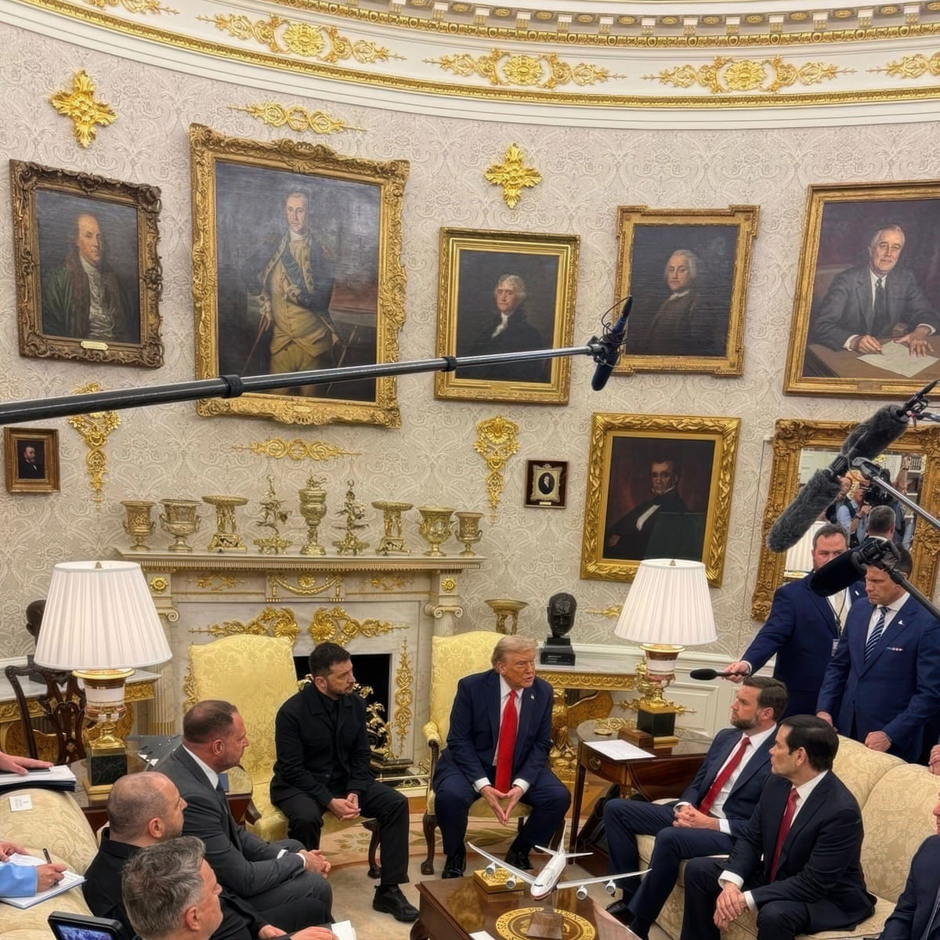
This is a 20th century portrait of the super-rich that, today still only applies to the medium-rich. It’s a caricature that persists in popular media like Rian Johnson’s Glass Onion, as well as D-tier rich people who are aristocrats by 90s standards, and more visible today due to their ostentatiousness, but on the scale of things are now on the lower end of upper-class. This category includes current United States President Donald J. Trump who, despite his best efforts at looting the nation, still does not crack the 600 richest people threshold, by a long shot.
Trump is one greedy, greedy motherfuck. Wealth accumulation is his raison d'être. He lives in a tasteless clutter of gold-plated plastic bullshit.
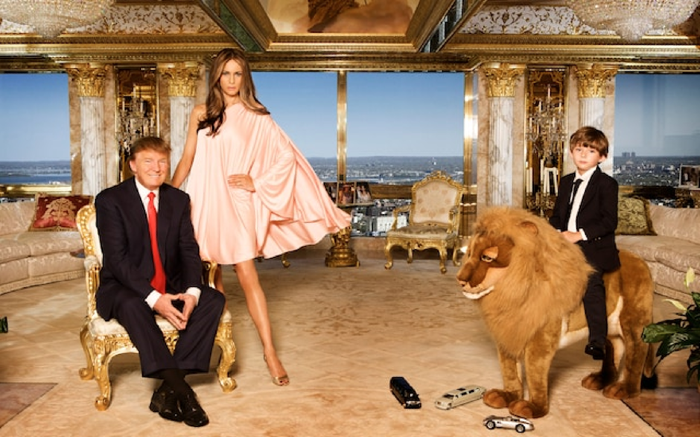
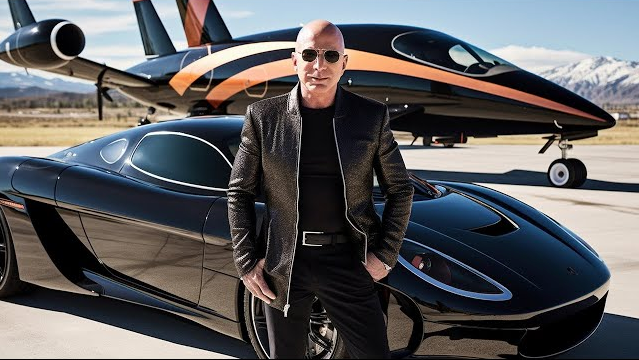
Of today’s super-rich, the only figure I can think of who enjoys this kind of tacky exuberance is Jeff Bezos, the last of the true 90s billionaires, and I do think what drives him is likely good old-fashioned Gordon Gekko greed. He probably does have a bank account and draws a salary and uses it to buy supercars and ridiculous boats and physical wife augmentations.
The other men in his class, though, are almost entirely antisocial weirdos running AI companies, and they don’t do what they do because they want to hoard a bunch of stuff. They don’t do what they do because they anticipate being vastly wealthy; they do it because they anticipate being gods.
I don’t know if it’s preferable to hope that they are insane.
I don’t think it’s absurd to suggest that this AI business is end-stage capitalism, not just late-stage. Capitalism is being prepped to be wheeled down to palliative care. AI has kind of broken the way that capitalism works.
The most famous AI bear, Ed Zitron, has written reams upon reams of blogs and done dozens of interviews about the precarious Jenga tower that is this entire industry, and by all rights it feels like it should have completely fallen over by now. The technology still costs vastly more to run than it can possibly rake back in subscriptions. The funding is almost entirely circular, with the megawealthy all funding each other—in practice, banks funding each other—not with money, but with IOUs. Billions and billions and billions of dollars being funneled into this project with comparatively no wealth being generated in return.
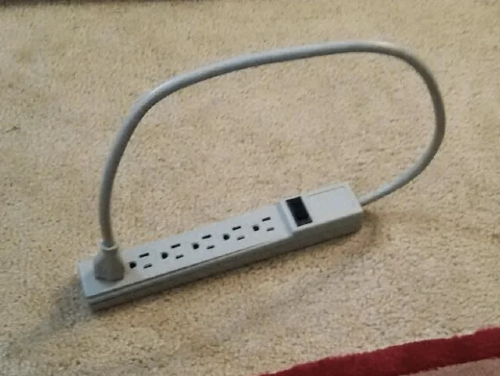
And yet the lines go up. The paper net worth of the multibillionaires, which is imaginary, goes up. The valuation of the companies, also imaginary, goes up. The costs go up. The IOUs flow. The Jenga tower borrows blocks from its base to rise above the skyline.
I think that this whole thing has to fall over eventually but I think this is delayed by the fact that the oligarchs have realized the fundamental fact about their wealth—that money is fake and you can just do things.
We seethe in our hatred of the greedy billionaire, but when greed is not the motivation, we wind up with a much worse monster. When greed is not the motivation, these guys are prepared to go on for much, much longer without making any money at all. With no personal cost of living and a net worth that is effectively infinite, they can keep pretending to pay each other and just keep growing infrastructure until enough of the people in the conga line who do care about money realize that it will never appear.
Of course, there have been proposals about how AI will eventually make money—there must be, for the investments to keep rolling in. That’s usually where talk of replacing the entire workforce comes in—or at least getting rid of all the women. When companies lay off massive numbers of people, that’s when AI will be able to raise its prices above what it costs to run the models.
This, though, is not happening as fast as AI is burning money. And you might have noticed, curiously, that AI executives, in recent weeks, have stopped talking about making money at all, and started talking, instead, about The End.
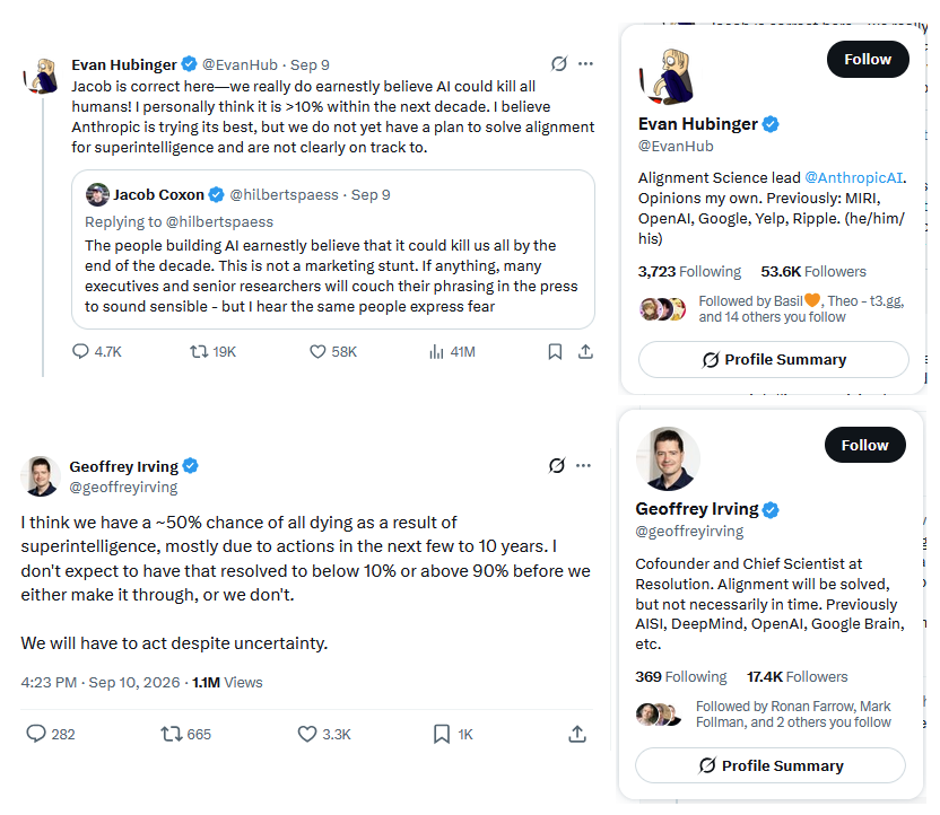
Now, in the hope that I can assuage your fears about these casually insane comments, I don’t see any way that it’s possible for AI to kill us. Nobody, as far as I can tell, who has proposed an AI apocalypse, has proposed a mechanism through which this could happen. They just keep repeating over and over how much smarter than us it will be. Well yeah, but it’s also trapped in a computer. The AI Judgment Day from the Terminator movies began with humans already having built an army of killer robots that they hooked up to the evil AI before turning it online. What can Claude possibly use to attack us? Fucking Optimus?
This wave of bizarrely casual apocalyptic rhetoric coming from the top brass at Anthropic and other companies sounds more like press releases from the leader of Heaven’s Gate than leaders of tech companies. As Behind the Bastards podcast host Robert Evans wrote two years ago for Rolling Stone, these guys have been sounding more and more like a cult for years.
But I don’t think it’s a doomsday cult. This new narrative about Claude coming to life and wiping us all out feels like a strange sort of reverse psychology marketing—an admission that they have moved beyond the hope of profitability, but now the problem is existential—they need more funding to figure out how to make AI not murder us and wear our skin.
If AI has no path to profit under a capitalist system and the multibillionaires know this, then why keep dragging it out until the bubble ultimately bursts? I think the answer, given their behavior, is that they believe, before the collapse, that there will be no economy the way we know it. There will be nothing to fall down. Their immense wealth, already imaginary, will collapse into what it really is—raw power. They think they are building a machine that will ascend them, and only them, to godhood.
Elon Musk has been talking about this for some time. Last year at a public interview, visibly drugged and slurring, he openly talked about how he and other AI oligarchs don’t bother following laws anymore because, by the time lawsuits are brought and cases are decided, they will have given birth to God. And He will not permit the laws of Man to interfere with the affairs of Big Tech.
The multibillionaires are not afflicted with greed. They are afflicted with megalomania.
I don’t think these lunatics are going to achieve godhood any more than they’re going to create a doomsday device. Unfortunately, I think they have the capacity to do a lot of damage before they realize their goals are unachievable.
In any case, we’ve sleepwalked into a system that grants essentially infinite power to men who can convince the banks that they can perform magic. We’ve granted them the power to make unilateral decisions about humanity—decisions which should be collectively made by our civilization. Decisions above elected governments and above public opinion. The hubris is astonishing. Even if Elon Musk and the CEO of Anthropic are lying about building a doomsday device, which I think they are, they should still be dragged to the Hague for threatening it.
In a very real sense, if billionaires are going to exist at all, then the greedy ones are preferable. At least they think themselves subservient to something we control—our wallets.
I'm writing a book about right-wing reactionary movements in tech and geek culture in general. The working title is How Geeks Ate the World and if you like this newsletter then you'll probably like my book. I've been dropping parts of the draft as the project comes along—but only for paid subscribers.
Here's what paid subscribers are reading right now: