Why Do Covid Revisionists Need to Fabricate Evidence to Make Their Case?
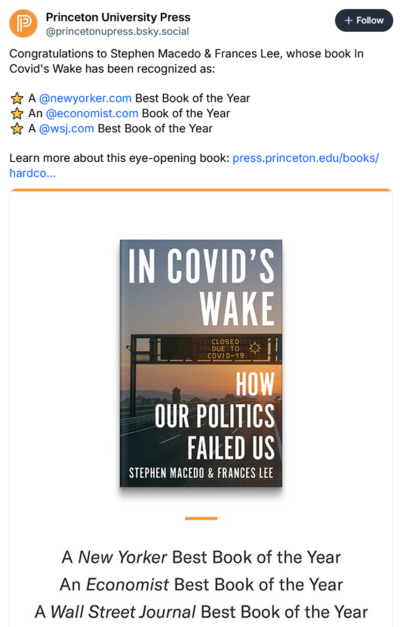
Yoel Roth, the former head of Trust and Safety at a now very dead website that used to be called Twitter, was recently made aware of something disturbing. He’d been quoted in a recently published, bestselling book, without his knowledge.
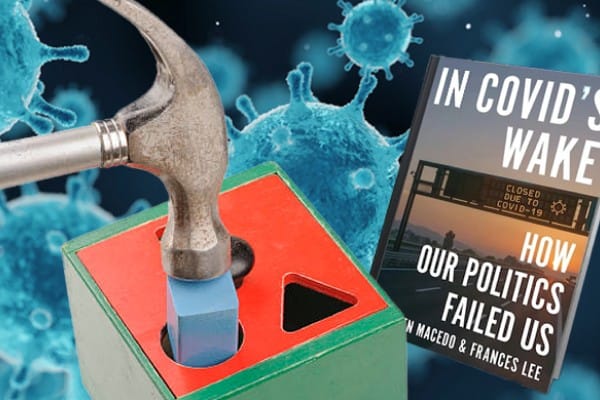
This in itself isn’t a problem—if you’re a public figure, you’ll never know all the places you’ve ever been quoted, as it’s not like they need to tell you—but it was a problem in this case because the book is In Covid's Wake: How Our Politics Failed Us by Stephen Macedo and Frances Lee, and the quote is technically what Roth actually said, while at the same time, one hundred percent opposite to what he actually meant.
Here's what happened: Roth’s father-in-law was reading this book when he stumbled upon a familiar name and urgently texted him about it. Roth doesn’t ever remember saying this and is alarmed because it’s the opposite of the actual truth:
“Yoel Roth, the former head of trust and safety at Twitter, states that ‘the FBI went beyond strategic information sharing and made direct moderation demands,’ including demands involving domestic speech.”
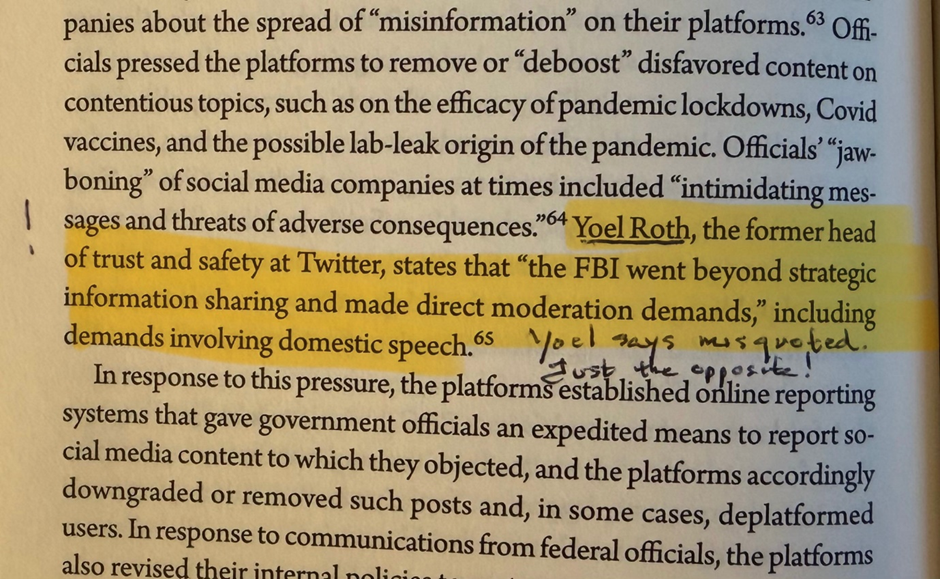
Did Roth actually state that? Did he type that sentence? Did he sit at his keyboard and tap-tap-tap those letters out in the exact sequence that the authors of the book alleges? Well… mmmyhhhhh… yes, kind of.
The “quote” is drawn from a heading within an article that Roth wrote for the Knight First Amendment Institution at Columbia University, where the substance of the article is specifically to dispute that heading.
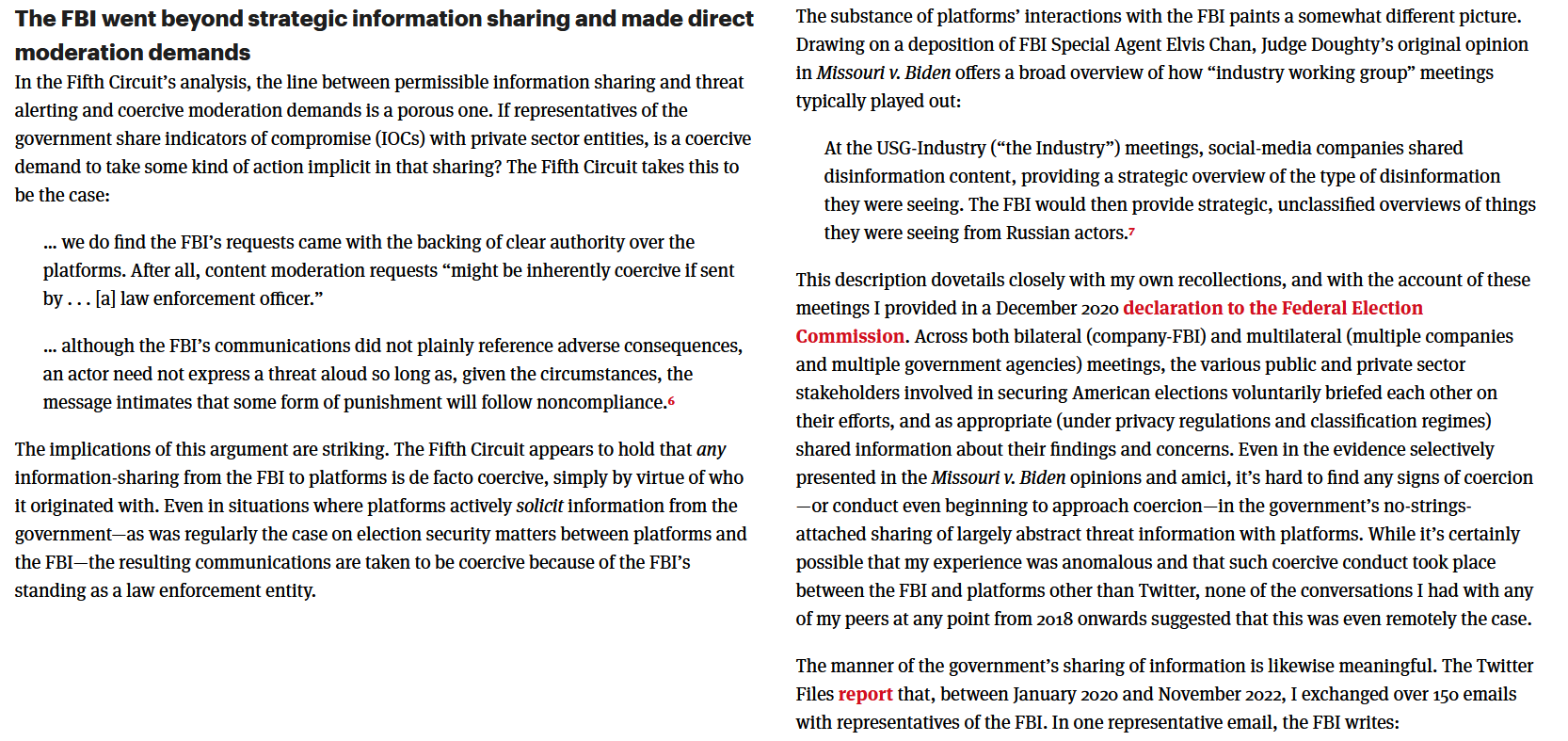
The idea that pre-Elon (prelon?) Twitter was subject to substantial moderation interference by the nefarious deep state three letter agencies, under Obama/Democratic control even during Trump’s first term, is a myth propagated by the whole Matt Taibbi debacle (Taibbacle?) of the Twitter Files back in 2022—an accusation so weak that even the entirely Trump-captured Supreme Court still couldn’t make it a thing.
And yet there is nothing short of a desperation for this to be true. Not just among the conservative grievance movement, who feel that their opinions not being popular enough in the 2010s can only be explained by a conspiracy—a “Censorship Industrial Complex” as coined by the Twitter Files chums—but also by a broader political umbrella of centrists and liberals who are frantic and famished for evidence to prove the Covid-19 pandemic was (and is) no big deal and we are absolutely vindicated in our resentment for all the stuff they made us do, and stopped us from doing.
To head off any comments pointing this out, I know that we are still in a Covid pandemic, but to be clear, we are still “in” the pandemic in the same sense that we are still “in” the influenza pandemic that began before documented human history. It is with us now until we have some kind of technology capable of completely eliminating viral disease from Earth.
I haven’t read In Covid’s Wake but I’ve listened to Michael Hobbes and Peter Shamshiri’s dissection of it on their podcast If Books Could Kill, and it sounds pretty much how I expected it to be. Hobbes and Shamshiri run through the book, claim by claim, and find litle more than misunderstood and misrepresented statistics all the way through.
Roth isn’t the only figure to have been misquoted to appear to be making the opposite case to what they were actually making. The authors use a study by Bloomberg Global Health Chair Thomas Bollyky to bolster the idea that non-pharmaceutical measures like masks and social distancing did nothing to help slow the spread of Covid. Bollysky, perplexed, claims his studies showed the opposite. The authors didn’t seem to interview any medical or disease scientists, and the positive reviews come mostly from journalists and academics outside of this field who aren’t equipped to see its flaws, while epidemiologists are mostly baffled by its publication.
Is this media illiteracy or something more nefarious? How does a book this badly researched get released by a major academic publisher?
Here's what paid subscribers are reading right now:
Co-author Stephen Macedo responded to Roth with an unconditional apology and promise to work with Princeton University Press to have the false quote and claim removed from future printings. It’s big of him to claim full responsibility and not throw his co-author under the bus, but it’s extraordinarily peculiar how this kind of mistake could happen at all. He claims he doesn’t know, but at a guess, he thinks he may have mistaken the header for a pull-quote.
As someone who’s trying to write a book that requires a lot of research I find it kind of insulting that skimming the internet for pull-quotes could be considered a legitimate way of doing it.
The authors of this book aren’t right-wing reactionaries. By all appearances they are liberals or even progressives. This probably goes a long way to explain why the book got such mainstream, uncritical, media applause. “Finally, someone on the left is saying what we’re all thinking, and we don’t need to look to, like, Dave Rubin or somebody anymore for quotes to back us up!”
In that sense, you can see how this book got hastily written and rushed to publication. It’s simply because it fills a huge market demand.
The right already have a wealth of books to choose from by people on their side of politics about how Covid was a big lie and everything would be fine, actually better, if we’d just gone on completely as normal, and to this day we would, maybe at worst, remember 2020-21 as a particularly bad flu season.
But people on the left didn’t have any such book. This created a need. I’m sure a lot of good faith efforts were made to write such a book from the liberal perspective but they just couldn’t make it happen until someone did what the right tends to do—massage data, skew historical reality, cherry pick the internet for gotcha quotes, mine poorly stated remarks, and maybe lie a bit.
In other words, the authors are telling a story that is more important than the facts of the matter, and the facts need to go where the story leads them, not the other way around. And though the market need for such a story existed, I don’t think the authors did this for money. I could very well be wrong, but do think the book came about from their sincerely held belief that their story was correct and the problems in the book arose from their frustration at finding the research to be so difficult. The hole was round but the peg was much squarer than they expected, but they decided what they needed wasn’t a round peg; What they needed was a hammer.
I get this because, I used to be kind of right-leaning nearly 20 years ago, and one of the things I had a sincerely held belief about was that climate change was a hoax, and my first attempt at writing a book was going to be on that subject. But I came at the project in good faith—I was going to look at all the arguments from the climate change side, I was going to find the rebuttals to them from my side, and I was going to put together a good, solid case for why my side was right.
It was really, really difficult.
The big problem was that every argument my side made was just really weak, and the strongest sounding arguments seemed that way largely due to the attitude they carried. The climate change side just seemed to get the last word on everything. My side kept making really stupid points that seemed tailored for stupid people.
This isn’t what convinced me I was wrong—that was a gradual process that didn’t land for another few years. What it did was make me more determined, because it made me think that, obviously, I was the smart guy who was going to have to finally sort this situation out for my side, the side I knew to be correct.
Suddenly I felt like the Hercule fucking Poirot of climate denial. I was going to get to the bottom of why the facts of the matter were so difficult to find. Who was suppressing them? I came up with motivations and hidden genealogies—one of my favorite leading theories was that the whole idea was invented by Margaret Thatcher to assert control over powerful fossil fuel unions. I came up with half baked ideas about “belief” in climate science was more similar to religion than science (Al Gore is just like a Jesus figure who got crucified!!) I leaned more and more desperately into conspiracism and fringe arguments, and relying more heavily on crazy overstatements from the extreme fringes of the other side (I remember finding some random blog post theorizing about how climate change could cause an earthquake that could split the Earth in half, and I thought debunking this was a big important gotcha for my book.)
It was a mission I was on. I was actively hunting for this stuff, I started ignoring the actual argument points as being something almost like a distraction, and what I did use, I massaged to force it to make sure it supported the point I wanted it to support… even if I knew I was kind of distorting the point actually being made. In my mind, I was literally massaging these arguments and graphs and studies to make them line up with the truth, so I wasn’t really being dishonest, in that way.
Could I see myself having yanked what I thought was a pull-quote from an article I didn’t bother reading, thinking it supported my position when it did the opposite? You’re damn right I would have.
I’m endlessly grateful that this dumbass project ran out of steam, not because I was at any risk of having it published (I was an undergraduate, and even these days you need to have a racist viral video on X to get a right wing book deal at that level of being a nobody) but I probably would have put it on the internet somewhere anyway and it would be an embarrassment that would follow me forever.
There was a chance it would have become that lifelong embarrassment because there was and is a demand for that kind of project. Something earnest sounding, methodical, and convincing that can reaffirm people’s priors from a moderate, liberal, or just not the smug, sanctimonious and tribal right.
That’s how this kind of sloppy and ill-researched project can come together in the first place, even in good faith, driven by a demand. But it doesn’t explain why the demand exists in the first place.
Why is it that so many people on all sides of politics are desperate for most or all of the narrative surrounding the first two years of Covid’s existence to be proven a lie? Why is there such a desperation for between one and two years worth of mostly moderate safety measures—which, for the most part, nobody has been forced to endure since sometime in 2021—to be retrospectively shown to have been completely unnecessary, or at least, for their absence to have been worth the loss of any number of lives that they saved?
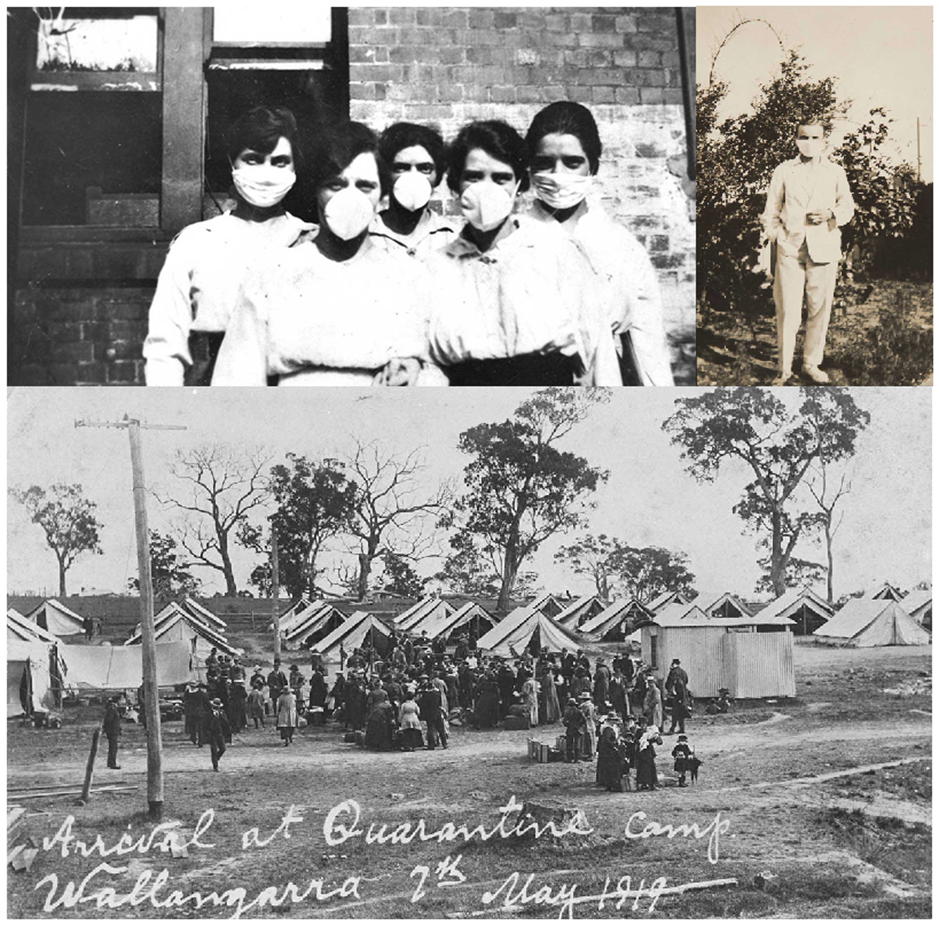
Why does it make such a difference that this was something that occurred in our lifetime and in our memory? Are there, for example, any writers who are willing, for the sake of consistency, to write a book explaining how the exact same measures enacted by governments in response to the 1918-19 Spanish Flu pandemic were an egregious violation of human rights that never should have been put into place? If not, why not? Why are you not horrified by the under-reported government tyranny during this time?
I venture, and this might be obvious: Most of the people desperate for authentic-sounding Covid revisionism didn’t suffer any great loss themselves during this time, and as a result actually were personally affected in a much more negative way by the social restrictions and the masks and the gathering laws and contact tracing and the school closures and constantly having to tell people to take their fucking microphones off mute than they were by the virus itself.
We don’t want this to ever happen again. The next time a virus comes along that we feel confident we and our families can personally survive, we don’t want to have to lose one or two years of life-as-normal for the sake of some abstract notion of being a “disease vector” for someone else’s hypothetical grandma.
But, we also don’t want to feel bad or guilty about that, because most of us do feel empathy for other people, even those we’ve never met. For a lot of people, the easiest way to satisfy both our “don’t want to harm others” desire and our “don't want to inconvenience ourselves to avoid it” desire is to entertain a very strong tendency toward a third option: “The people who say that my avoiding personal inconvenience will harm others are wrong.”
This ties in with the climate change thing as well. I haven’t become an expert on climate change since my failed book project—other than the fact that I’ve come to realize it’s true, I don’t know what extent of disaster we can expect to see in our lifetimes as a result and I know the science isn’t settled on that either. I have stopped expecting that humanity will ever enact any major policies to prevent it because the tendency toward “neither we nor our governments should do anything that affects our lives on this matter because the scientists are hysterical and actually everyone in the world in our lifetimes will be fine/adapt/live with it” is too strong.
A hundred years from now, humanity isn’t going to look back at Covid-19 measures as anything draconian or evil or misguided any more than we today see the same measures during Spanish Flu having been any of those things. Future historians won’t view the Covid vaccine as any more evil than most of us today view the smallpox vaccine.
If, however, in the course of those hundred years, governments of the world collaborate on enacting some kind of environmental measure that will effectively prevent the worst potential loss of life from climate change, in a way that inconveniences a lot of people for even one or two years, you bet your ass people will raise hell about it for decades in an attempt to ensure that government never, ever responds to a threat like that again. If we just have one major human existential threat per century or so, enough for each one to fade in collective memory from “our government’s tyrannical overreach” to “our grandparents’ heroic call to action” then we’ll probably do okay.
I'm writing a book that I'm hoping will be much better than my terrible, aborted climate change project, having learned all the right lessons from that time in my life. It's about how the rise of the internet propelled far-right toxic masculinity to the American Presidency in the space of a single generation. The working title is How Geeks Ate the World and I’m going to be dropping parts of the draft into this very newsletter as the project comes along—but only for paid subscribers. A new chapter is coming out this very weekend! So if you want to read along in real time, please consider subscribing. Otherwise I’ll be keeping you in the loop. Check it out here:

Here's what paid subscribers are reading right now: