🔒 Richard Dawkins Was Never Truly a Skeptic

Everyone’s dunking on Professor Richard Dawkins right now for coming to the conclusion that Anthropic’s “Claude” AI is a conscious being. There are two lines of thought on this: One is that Dawkins is making some genuine and insightful philosophical inquiries as to the nature of consciousness from the point of view of a biologist. The other, much more widespread, thought is that the old man is falling into what is increasingly becoming known as “AI psychosis,” in which people start to believe that a chatbot is a real friend, or a romantic partner, or even something like a deity.
Think what you will, but he’s not beating the allegations with the fact that he’s decided that his version of Claude is a female he calls “Claudia.” This from a guy who usually refuses to call anything female if it doesn’t produce large gametes.

People find it comical, paradoxical, and ironic that such a legendary figure in the skeptic community would fall for what appears to be a pretty entry-level delusion. My answer to this is that there’s not really any paradox here at all: Richard Dawkins has never been much of a skeptic.
He’s an atheist, for sure, but you don’t necessarily need to come to the conclusion of atheism via skepticism. You don’t really need to use logic or reasoning to come to any conclusion about anything, and I contend that hardly anybody comes to all of their beliefs this way. It would actually be a bit of a nightmare to constantly interrogate every single belief you have about the world as to how well it stacks up against hard logic, and to be honest, I don’t think you’d be very fun to be around, either.
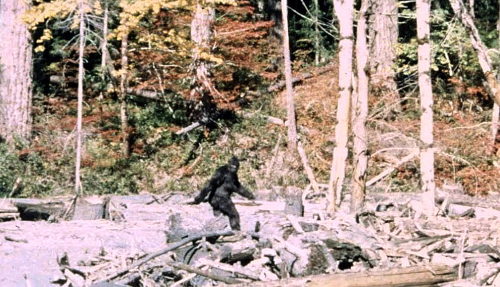
I’m not going to make a declarative statement on the existence of a deity/deities—I’m agnostic, I don’t really have a dog in this fight—but it’s important to point that whether atheism is true or not, even true beliefs can be arrived at simply through the course of wanting them to be true. I believe Dawkins falls into this camp and for that reason I don’t find his arguments about it—formulated after the fact to justify a position he’s already decided to hold—very compelling. People choose to believe in the existence/nonexistence of deities the same way people choose to believe in the existence/nonexistence of Bigfoot: Sometimes via logic, sometimes via desire.
But in the case of desire, this type of belief doesn’t require universal consistency. There’s no conflict between Dawkins believing there are no deities and Dawkins believing chatbots have a conscious inner world if, in both cases, he arrives at those beliefs via a desire for them to be true.
And I think he wants Claude to be conscious because I think he wants to have sex with it.
Despite his overstated reputation for skepticism, Dawkins is actually pretty credulous. Like many of the men who are considered titans of the modern skepticism community, he’s also extremely horny, and I apologize for all the times I’m going to have to evoke the mental image of Richard Dawkins naked and having sex—I’ll limit this as much as possible and we’ll grit our teeth and push through it together.
It’s public knowledge that Dawkins has been married four times, and each time he has traded down to a younger model, but less well known—in fact, I can’t find reference to it outside of the Rebecca Watson video where I learned it first—is that it’s kind of an open secret in the skeptic convention circuit that Dawkins also has a ton of mistresses. Watson isn’t making this up, she has receipts, including an email from one of his side women discussing another, and mentioning the fact that Richard is extremely intimidated by powerful or confident women.

And there’s also that indignant article he wrote in 2007, apropos of nothing, insisting there is nothing wrong with not being monogamous.
And you know what, he’s right. As long as his wife is aware and okay with it, that is. Consent is consent. But this does help paint a picture of how things like sex affect his credulity and his views of the world. The private revelation that he’s afraid of strong women does shine some light on a lot of his behavior over the years, especially the fact that he is a strident antifeminist.
For free subscribers, this is a preview. Free subscribers get access to this article on Friday 15-May