Some News on My Book, and a Requiem For a Career

Next week I’m going to be submitting a 20-page book proposal to a real, living, big-deal literary agent, but it feels like being tagged out as I’m sliding into home base.
It’s very much not the type of book I thought I would be pitching. I always wanted to write novels. I still do, but I’m getting old and I hear new novels are just being fed directly into Anthropic’s AI training computer/shredding machine as soon as they leave the printer now.
The book that I actually wound up writing is intrinsically related to all of the reasons that I have to be hopeful, but realistic, about its actual chances of publication. It’s more than just AI and what it might do to the entire writing industry going forward. It’s about how we allowed the internet to become a Trojan horse for a class of reactionary bullies who used it to hijack culture from within, bulldoze social progress, and erect tentpoles of populist fascism all over the Western hemisphere.
Ambitious, huh?
Part of the cultural revolution project is erasure. A few months ago I wrote about how the internet is being erased, partly by neglect and partly by malice, but I didn’t realize at the time how imminently this erasure was going to affect me, personally.
If you will indulge me a bit of backstory, I’ll try to get to the point as fast as possible:
From 2008 to 2019 I worked for the pop culture website Cracked, first as a freelance contributor, then as an editor, a columnist, and a researcher. How I got this job was a miracle of circumstance: Sometime in the 1990s, when I was still in high school, I registered an account on an internet forum attached to a website called David Wong’s Pointless Waste of Time, which was run by a guy named Jason Pargin, who is now a bestselling novelist. Over the years I worked my way up through the ranks as moderator and then administrator, which, if you’re new to Millennial internet lingo, is internet cop and internet Judge Dredd, respectively.
In 2007, PWOT, as we called it, was purchased by a media conglomerate called Demand Media (apparently now “Leaf Group”) which had also recently purchased the intellectual property of an old Mad Magazine clone/competitor called Cracked Magazine. Their attempt to relaunch a print magazine had failed, but they wanted to lean into digital media, so they hired Pargin as the executive editor of this project. Pargin, in turn, hired people he knew and trusted as contributors and editors, including myself.
During Pargin’s tenure, Cracked rocketed to one of the internet’s most popular websites, and for a while, in our content category, we were rivaled only by CollegeHumor and something called Funny or Die. The latter, you understand, was run by people like Will Ferrell and Judd Apatow, and we were still regularly trouncing them in pageviews. We felt like the kings of the internet.
Over a decade of words on the page, looking back, it surprised me how little I had actually published under my own name. The bulk of it, by far, was the editing, which, in most cases, was very much better described as ghostwriting. We were voracious for content—we turned back nobody on the basis of their ability to write. If the draft made sense and was written in English, we could turn it into something we could feature. Hell, we billed ourselves as a comedy website but we didn’t even require jokes in the draft. We could supply those. As long as we had a scaffolding, no matter how flimsy.
Sometimes I’d get a quality piece I could punch up a little. Sometimes I would write basically the entire piece from scratch. Most of the time it was somewhere in between, but since the quality threshold for incoming drafts was so very low, there was a lot of rewriting, recomposing, restructuring. This was a very good place for amateur and zero-experience writers to get their start.
I published fewer than 50 articles on Cracked under my own name. I didn’t keep a tally of how many I edited, but the math of it works out to being somewhere between 400-500 articles. Most of those were more than half written by me, and I want to say, maybe, a third or so, were written entirely or nearly entirely by me. These articles were getting millions upon millions of pageviews. Words I had typed were being read daily by a number of people comparable to the population of Barbados.
In any case, none of the pieces I edited got my name on them. That’s just how it worked, and I imagine it’s pretty standard—whether 1% or 90% of the text was mine, full credit went to the person who had the idea.
I was paid extremely well for this. I was paid, frankly, better than I actually deserved. But you need to understand the money printer that was Cracked in its golden age.
There were many factors that led to Cracked’s rapid collapse in the years between 2015-2020, but a major one was related to the rise of the tech oligarchy that none of us really realized was happening back in those years.
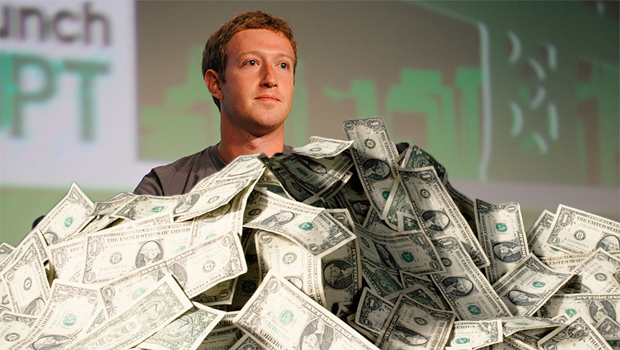
Long story oversimplified: Mark Zuckerberg made the unilateral decision to kill the website model of the internet. We didn’t even know he had the power to do that. In retrospect, we should have seen it coming. Over the course of the 2010s, Facebook grew to the extent that people sharing our links to their friends on that platform became the primary driver of traffic to the site. Then, in 2014, they abruptly turned off the spigot and killed link-sharing on Facebook.
If you’re familiar with Cory Doctorow’s essays and books on “enshittification” then you know this general story and I’m not going to paraphrase it too much. For us specifically, it resulted in a few years of floundering and scrabbling and layoffs and damage control and more layoffs. I was a contractor, so I was never officially fired; They published my last piece under my name in 2019 and then at some point shortly afterward they stopped sending me projects. I didn’t know they were really finished with me until they silently revoked my access to the company Slack.
By horrible coincidence, this was also during Covid. It was rough.
Why am I telling you all of this? If you’re subscribed to me, particularly if you have been for a while, then I thought you might be interested in a little bit of biography, but more to the point, you will hopefully be interested in the news I have that requires all of that biographical context. To quote a cliché, I have good news … and bad news.
In the years since my departure from Cracked I’ve been trying to salvage my writing career and it’s been real tough because it was, as I’ve often said, the best job I’ve ever fucked up. I fucked it up because I didn’t leverage it. I didn’t start a blog and drop links to it in my articles. I didn’t join Twitter and build up 500,000 followers during an era when that was totally possible for someone doing what I did. I didn’t make many friends within the industry, and those I did make either dropped out of the creative industry altogether or pivoted to stuff like TikTok, so couldn’t help me. Also, two of them died.
But I now have a relatively respectful thing going on here that I’m still building. It’s small, but it’s growing. And I’ve gone back to writing a book that I had shelved several years ago when my writing career went tits-up. I’ve been posting pieces of that book online as a perk for paid subscribers.
A few months ago I got an automated email from Substack telling me that another Substack writer had begun recommending my work. I recognized the name of this person (who I feel it would be impolite to name without permission) because they are a relatively well-known novelist. I tracked them down on social media and caught them promoting the segments of my book to their followers. So I got in touch.
One thing led to another and I wound up being introduced to this writer’s agent, who read my pitch and chapters and then, in a turn of events I’m still stunned about, gave me a contract and asked for a proposal.
That is the good news. If you’re a paid subscriber and you’ve been waiting for the next chapter and wondering why I stopped posting them, that’s why. I’ve been working on this big document about what this book is about and why it’s important. I’m just finishing it up now.
But I said there’s bad news, didn’t I? Somebody, at some point, is going to ask who the hell I am.

Here's what paid subscribers are reading right now:

And who am I? I’m a middle-aged writer who, until recently, had a lucrative career writing for one of the biggest pop culture websites on the internet … a website that nobody cares about anymore, didn’t put my name on most of the stuff I wrote, and no longer employs anyone who has ever heard of me.
That’s not even the worst of it. The worst is that, just this week, I discovered that Cracked has started taking down my articles. The ones that did credit me.
This isn’t targeted at me. They appear to be removing whole slews of articles written by the original staff of the site, including Jason Pargin, and rather than anything malicious, it’s probably cost-cutting or formatting related and it’s probably automated rather than staff-directed. They’ve probably got an AI agent running around the source code making these decisions. Cracked is a cheap Instagram meme aggregator now so I doubt their operation is particularly sophisticated.
I haven’t dived in to see how much of my work has been deleted, but it becomes ominously clear that I’m about to become, despite years of the contrary, a nobody without any visible published body of work. And I need to try to sell a book on the strength of that.

You can make your own mind up about how much of my rage at the American tech industry is personal. These people are part of an ideology that has been attempting to dismantle the internet and pop culture as a whole since the early 2010s. That is, coincidentally, what my book is about. It’s a story I’ve been trying to piece together for ten years, now, and it comes loaded with forgotten cultural history that I haven’t seen recorded anywhere else.
Presumably this project would be a lot stronger if I could secure unique interviews, conversations, or behind the scenes details about the history of the internet that nobody had thought to ask or write down before, but that’s another incredibly frustrating element to all of this—nobody will talk to me.
This is likely, again, because I am a nobody with no visible published body of work. I’ve sent at least a dozen emails and private messages to current or formerly prominent cultural figures, writers, and others, always met either with non-responses, polite declines, or commonly, they will agree to answer questions and then never, ever respond to me again even with prompting.
It is extremely demoralizing to say the least.
But it doesn’t kill my hope. There is more good news, and that is that my situation isn’t without precedent. One of the more important books I’m using for my research is It Came From Something Awful, by Dale Beran. Dale Beran, as far as I can tell, was a nobody with no visible published body of work, who was able to publish this book on the strength of a blog essay he wrote on the topic that went viral.
To you, my wonderful subscribers: I need your help if you’re able to provide it. That is just that, if you’re interested in my work or the premise of my book and especially if you know others who might be interested, please share it around. The more interest it generates, the more likely I am to be able to tempt an actual publisher.
Also, if you are a writer/content creator/somebody with an audience who would like to talk to me about it, I’m more than happy to have a discussion, do an interview, come on your podcast, whatever. My Bluesky DMs are open and my email address is admin@speterdavis.com.
Although the parts I have written so far are only partially free to read, this is not a veiled attempt to beg for more paid subscribers (though I’m always very appreciative of those who do.) Thus, as I need to pitch it to my agent, so too do I pitch it to you:
What the hell is it about?
There is no single overarching explanation for the recent rise of the populist right, but I focus on one that I feel is pretty important: Masculinity. In a very real sense, it boils down to two schoolyard archetypes that govern all Western masculinity narratives—the geeks versus the jocks.
You will notice that I framed these as male archetypes, even though there is nothing preventing women and girls from being geeks. But that’s exactly the thing: These are archetypes. When we see references to geeks, or nerds, in pop culture, the image it’s usually trying to provoke is male. As an aside, I deliberately use the word “geek” rather than “nerd” as much as possible because I’m trying to avoid the perception that what I’m describing has something to do with intelligence or booksmarts. It’s about social roles.
Specifically, it’s about how these social roles relate to the feminine.
It’s important for me to clarify that my thesis is not “geeks are bad.” I’m a white male geek, I’ve known hundreds of geeks, men and women, and none of them bad people or misogynists. I’m discussing a particular subculture of people that did become dominant online and, I do believe, led powerfully to the MAGA phenomenon and related movements.
It is easy to think that the jocks and the geeks are enemies, but that is not exactly their relationship. The film Revenge of the Nerds is a good example—this appears to be an example of a straightforward enmity between the archetypes, but think about the actual conflict and its resolution: The conflict is about getting girls and the protagonist Nerds don’t achieve victory by being nerds. This not a victory for nerdism. They win by becoming jocks. They use their cunning to out-jock the jocks and successfully appear to be jocks.

With that framing in mind, my book is about the history of the internet and tech culture over the first quarter of the 21st century. Early adopters of the internet, as well as the founders of the tech culture of Silicon Valley, were overwhelmingly white male geeks. They seeded its entire culture, and this was a culture of men who were already uneasy about the status of their masculinity and their perceived lack of success with women as opposed to the jocks. For this perception, many blamed women.
The early years of the internet were a Geek Wild West, virtually free of both women and jocks. When the internet opened up to these groups, they were not necessarily welcomed—the women much less so than the jocks, who found opportunity.
Women’s entry into internet culture was seen as an incursion and an invasion into geek (male) spaces and geek (male) interests, resulting in an escalating series of culture wars to excise women from these communities as well as liberal and progressive inclusivity politics in general (as much of these communities were as much white-coded as they were male-coded.) Conflicts with names like Gamergate, Sad Puppies, and the New Atheism exploded across internet culture in the 2010s.
Concurrently, a phenomenon loosely described as “the manosphere” began to take over this reactionary geek subculture and mutate into a viciously masculine and misogynistic geek pantomime of jockdom called the “Red Pill” community. It is this community that ultimately joined forces with true jock political forces like Donald Trump in a broad project to forcefully masculinize Western culture.
I trace the origins of Red Pill culture back through previous iterations of reactionary masculinity and antifeminist backlash, like Pickup Artistry; subcultures that predate the internet spread like wildfire and corrupted its culture. I talk about the rise of jockhood-parody “fratire” in early online comedy like Maddox, Seanbaby, and Old Man Murray. I trace cultural currents through Something Awful and subsequent communities like 4chan and Tumblr. Then, the rise of social media, and ultimately, the hostile takeover, systematic dismantlement, and restructure of the internet by the tech oligarch class that boiled in this culture and had the power to stage a revolution.
And that’s why we have the official White House Twitter account posting spinning sonnenrads and talking about Harambe while a teenager named Big Balls leads a federal department named after a 2013 Facebook meme to fire women and black people from the government and steal social security data at the behest of a 4chan-cooked trillionaire who drops rare Pepes while he throws up the Roman Salute.
You can find extensive excerpts from most of the chapters I've written so far here: How Geeks Ate the World. Paid subscribers, obviously, can get beyond the paywalls and read even more. These are not the final versions of the chapters I will ultimately include in the book (they will likely need to be edited down a lot, but that just means you get a lot more content now!) I don't know how much more of this I will post to this newsletter, now that I'm shopping it to publishers, but I hope I can come up with some other perk if I go quiet on this now. In any case I will keep you in the loop about whatever's happening.


Here's what paid subscribers are reading right now: