🔒 The Internet is An Ever Expanding Graveyard
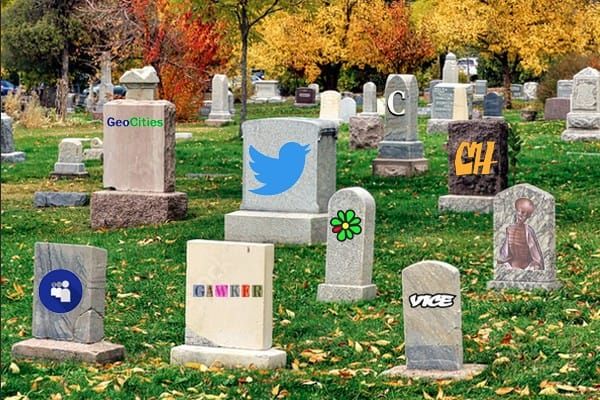
Something has been bothering me for a little while now. It was exacerbated recently by a short essay by Dave Karpf about the fact that Bluesky isn’t taking off. Like, at all.
And I know a lot of you are going to say “Well, of course it’s not taking off, it’s just ultra-woke Twitter. Most people who aren't interested in fighting about whether left-handed sporks are ableist just stayed on Twitter.” But that’s just the thing—Twitter is in rapid decline as well. Social media is starting to collapse like a dilapidated structure. Yes, when Elon Musk broke the political emulsion, the left went largely to Bluesky and Threads and the right (and those prepared to tolerate it) stayed on Twitter. But most people left and went nowhere.
As Karpf theorizes, they went to chatbots. And they might never come back.
Of course, the people who are easily able to wave goodbye to social media are likely the people who didn’t need it much in the first place and meet all of their social needs by, you know, hanging out with people. There’s no reason to believe that Twitter’s estranged children are spending all their time chatting to Claude instead. But it’s one symptom of the problem.

This is bigger than what we’ve been traditionally calling social media, which many, maybe even most, people have no interest in or use for. I argue that all media is social, but that would deprive us of a useful term. Still, I don’t know if you’ve noticed the sounds of laughter in the halls growing fainter. People just are not interested in sharing their stories online anymore. To repeat a term that’s already overused but still describes an important phenomenon: the web is becoming too enshittified for people to care much anymore. And while I definitely don’t want to imply there’s anything wrong with touching grass, I still think this is an extremely ominous thing.
At the turn of the millennium we put all of our eggs in the internet basket believing that it would be the way that we did things for a good, long while. We moved everything onto the internet. Over the next couple of decades we went hard and ruthless with it like a retired couple downsizing for life in a motor home. We went to work ending physical media and replacing it with the internet. First, news media, then games and movies. Every form of media we consume became a website, a download, a stream, a subscription. For convenience, we put everything we owned on the cloud.
I always thought that was a cute idiom, “to put all your eggs in one basket.” Don Quixote’s Cervantes came up with that neat little metaphor way back in 1605 to describe something that you should not do, because of what happens to the eggs if you drop the basket. And, folks, we’re dropping the basket.
If we’re all going to move into the same house together then it’s important to maintain the place.
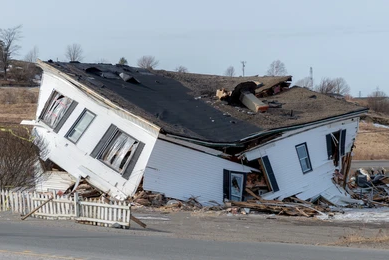
I’m sure I sound like a broken record mentioning that I’m writing a book, but tough because I’ll need to advertise it to sell it and you’re my main audience right now, but also it’s relevant because a great deal of it draws on stories from the internet prior to the first Trump presidency, and a shocking amount of that stuff does not exist anymore. How the hell am I researching? I’m leaning very heavily on the Internet Archive.
I’ve often said that I believe Wikipedia is the most important website on the internet, but Internet Archive has overshot it for me recently. Both of these sites are nonprofits that rely on donors, of which I am one. One of the most staggering misconceptions that’s regularly toted as both an axiom and a meme is “the internet is forever.” No, folks, the internet is about ten years. That’s being generous, actually, it’s closer to eight.
For free subscribers, this is a preview. Free subscribers get access to this article on Friday 29-May