🔒 Suicidal Empathy and Prescriptive Psychopathy
Hey there,
Sorry folks, the version of this article I sent earlier was missing a chunk of text in the middle and I don't know how that happened. Please read the corrected version from after the picture of Russell Crowe around 2/3 down.
--
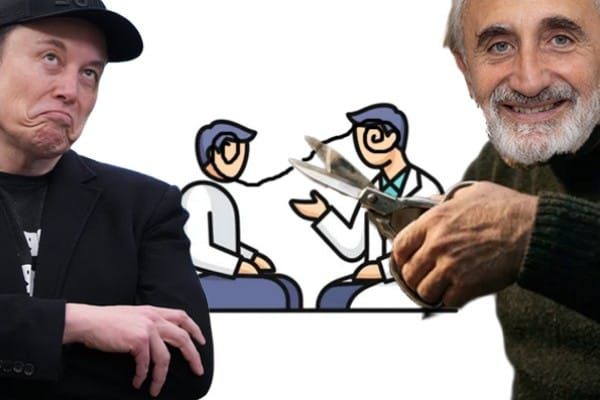
In today’s context of Elon Musk condemning some millions of people to death in an effort to shock the liberal West out of its addiction to caring about strangers, we’re once again in a discourse, unfortunately, about whether empathy is bad. Unsurprisingly, the richest people in the world are all on one side of this debate and I’m sure you can figure out which side that is.
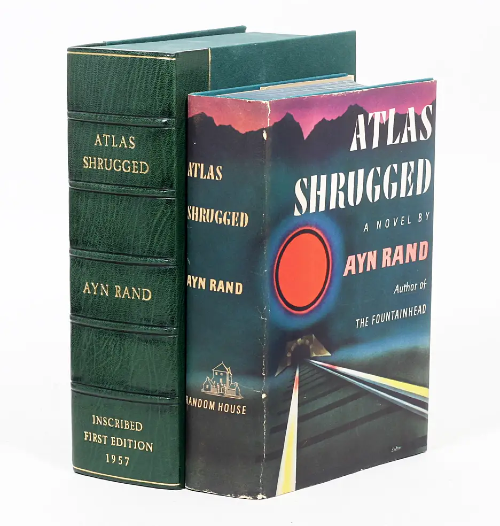
It’s not a new idea, though. It’s definitely older than Ayn Rand (it’s certainly as old as humanity) but Rand is the earliest major figure I can think of to add to the corpus of philosophical ethics the idea that putting another person before yourself in any consideration, more than being foolish, is actually evil.
As a brief sidenote: Altruism, empathy, sympathy, and kindness are four separate things, of course, and you can have any one or more of them without having the rest, but we’re going to lump them all together today because that’s what most of the people engaged in this debate are doing.
In a philosophy classroom today, Rand is a footnote. I remember one line about her in a textbook that detailed different ethical systems. In Silicon Valley, however, she towers above Plato. Her supremacy of the mighty industrialist gives tech billionaires all the permission they need to do whatever they feel like with the knowledge that government regulations are toothless once you accrue enough wealth.
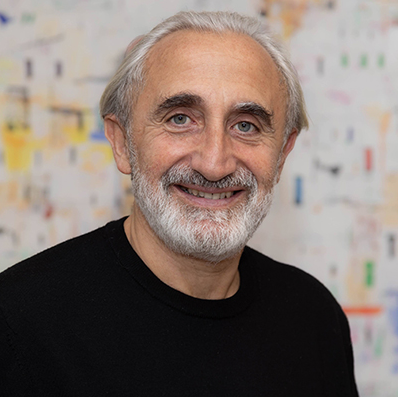
Rand’s modern equivalents are even less sophisticated; These days, the oligarchs turn to a Canadian marketing professor named Gad Saad for all their permission-to-be-an-asshole needs. He’s been described as a Temu Jordan Peterson without the clinical background, and his objection to empathy as outlined in his books The Parasitic Mind and, more recently, Suicidal Empathy, is extraordinarily basic: He stresses that he doesn’t oppose empathy per se, but that his specific brand of “suicidal” empathy is what happens when you, to his mind, exaggerate the role of nurture over nature in understanding human behavior and attempt to empathize with somebody quite dissimilar to yourself.
So, for example, people wrongly try to empathize with criminals with the mindset that criminality is linked to trauma and poverty, when in reality, criminals are simply bad people. Or, people wrongly try to empathize with Muslims with the mindset that their ideologies are linked to a particular geopolitical context, when in reality, Muslims are simply bad people. And so on.
It really is that basic, and when you drill down… Saad actually kind of is opposed to empathy. If you’re only empathetic toward people who talk like you and look like you and share the same economic and geographical background and believe very much the same things that you believe, you’re really just saying that you’re only empathetic toward yourself, which, I think we can agree, is not a coherent use of the word “empathy.” But it does appeal powerfully to people like Elon Musk who see it as a useful way of making white nationalism seem high-brow.
In reality, Saad’s work will make you think Ayn Rand was a philosophical heavyweight in comparison, and I think a key reason why Silicon Valley Randroids now flock to Saad is because his books are less dense and also more explicitly racist somehow.
In Suicidal Empathy, Saad deliberately and hilariously refuses to define “empathy,” brushing it off in a very “it’s just complicated, okay?” way and basically conflating it with kindness. He goes on to list a whole bunch of examples of when being kind to people is bad for you, including the film The Silence of the Lambs, in which a serial killer lures women to his car by pretending to be disabled and in need of help.

Recently Saad and his fans had a powerful immune response to a video of actor John C. Reilly describing empathy as a “superpower.” Gad Saad, conversely, refers to empathy as a “parasite” and speaks of it in the language of infection and disease. He draws a sharp distinction between what he calls the “epistemology of truth” (logic, good) and the “epistemology of care” (emotion, bad). He’s just ripped off a longstanding right-wing complaint about the invalidity of emotion and laced it with the language of philosophy to dress it up like something Jordan Peterson could be proud of, when really, Ben Shapiro says it more succinctly: Facts don’t care about your feelings.
The basis of all rational self-interest philosophies is the idea that one must act logically at all times, and that trusting other people, being empathetic, and being altruistic, is all fundamentally illogical.
Record scratch, freeze frame: They’re right.
For free subscribers, this is a preview. Free subscribers get access to this article on Friday 3-July